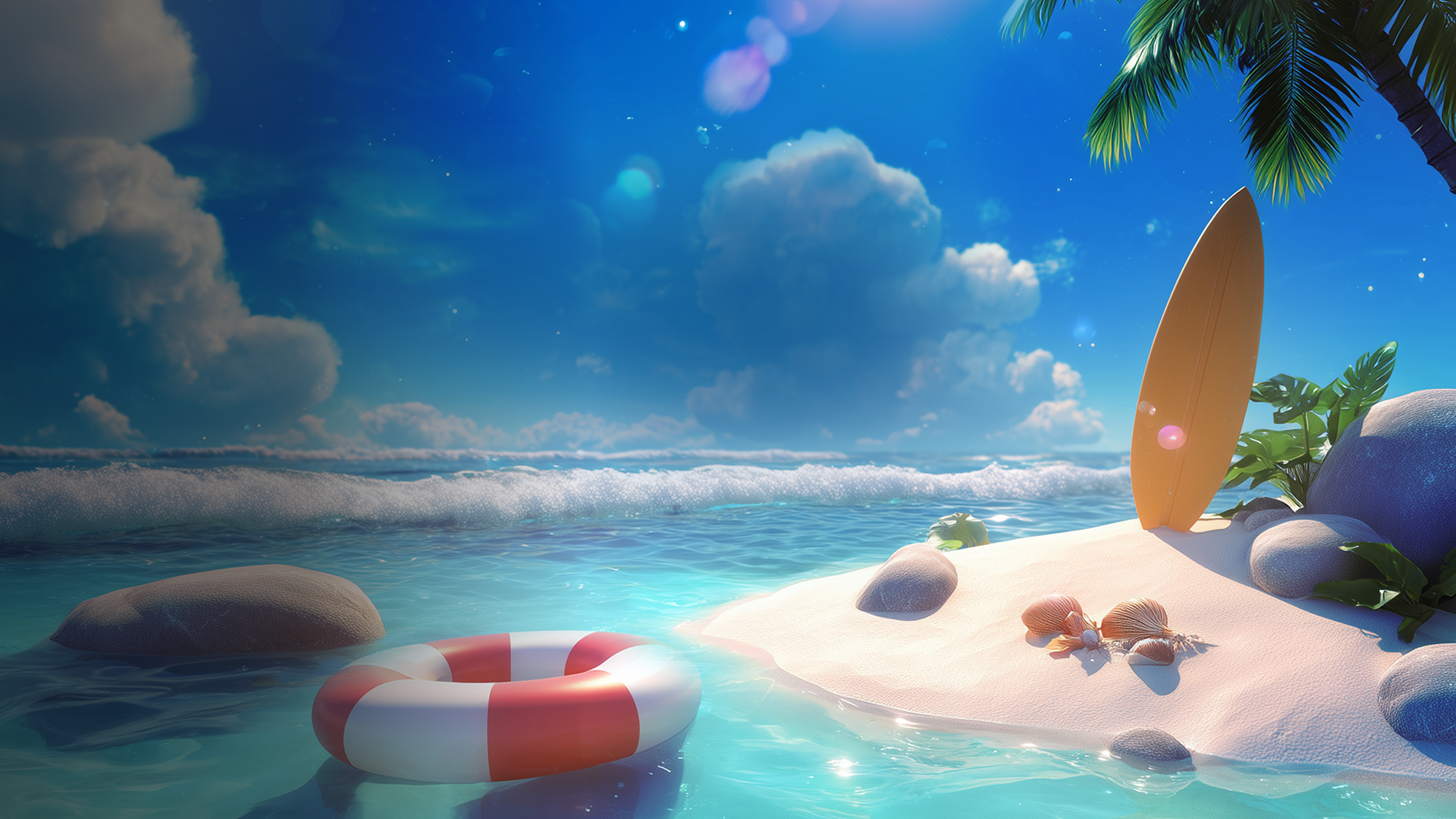
Beach Party
Overview
A feature - rich slot game designed to maximize player engagement and visual appeal.
Role
UI/UX Designer
Tool
Figma
Duration
2 Months
Beach Party Game Project
Game UI/UX Design @ Bitus Labs
At Bitus Labs, I designed the UI/UX for a feature-rich slot game aimed at maximizing player engagement across PC, tablet, and mobile.
To address common cross-platform usability issues, I created a responsive UI system that maintains visual consistency while adapting to different devices. Working within a tight timeline and a small team, I independently handled the end-to-end design process, from layout and visual system to testing.
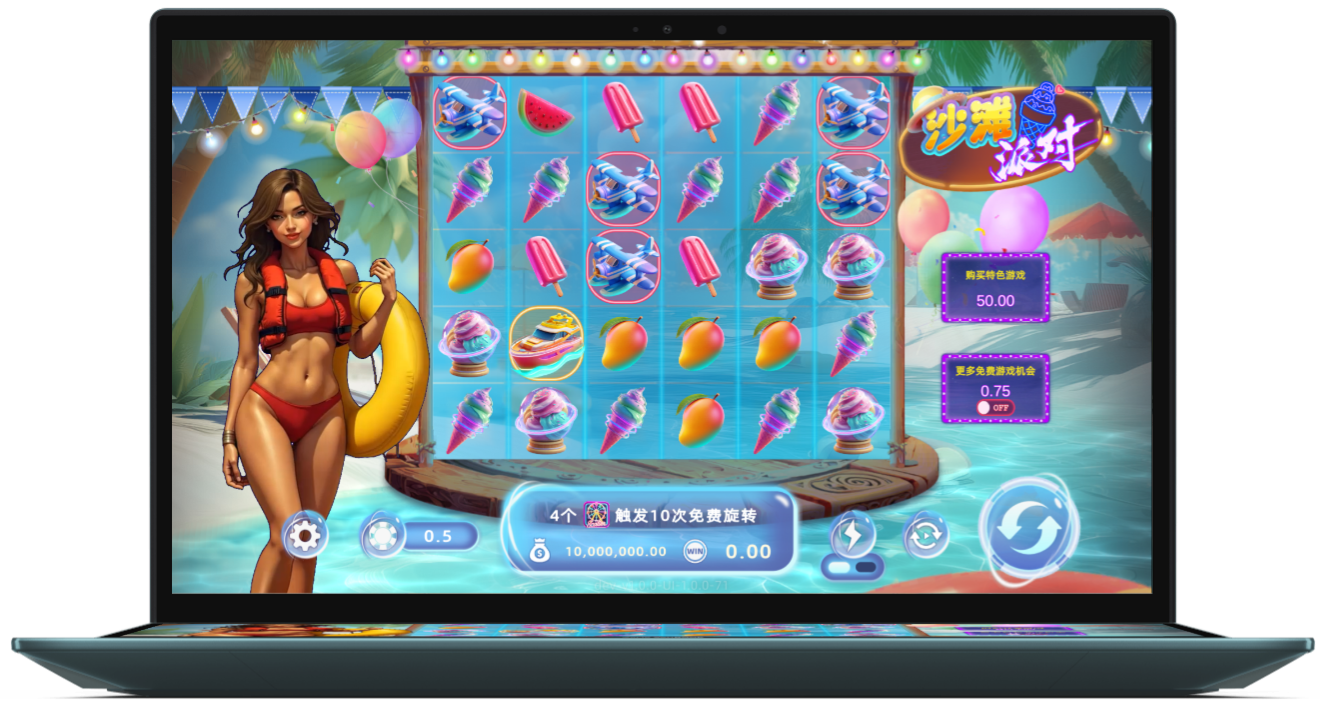
I led the UI and UX design of both the main interface and secondary interface for this project, taking ownership of the overall visual layout, game buttons design, and interaction patterns.
Project
Problem
📄 Overview
Beach Party is a cross-platform slot game developed at Bitus Labs, designed to deliver an engaging experience across PC, tablet, and mobile.
To address common layout and usability issues across devices, I designed a responsive UI system that maintains visual consistency while supporting the game’s bright summer theme. I was responsible for the end-to-end UI/UX design, including layout, visual system, and cross-platform adaptation.
👥 Stakeholders
I worked closely with product managers and developers to align on features and technical constraints. Through regular feedback and iteration, we ensured the design was both feasible and consistent across platforms.
⚡ The Challenge
How can we design a consistent and responsive slot game experience across PC, tablet, and mobile without compromising usability or visual appeal?
Most slot games are optimized for a single platform, leading to layout inconsistencies and usability issues when adapted to other devices. The challenge was to create a unified UI system that maintains clarity, consistency, and engagement across different screen sizes while supporting a fast-paced gameplay experience.
How might we create a consistent cross-platform slot game experience while introducing a fresh and more engaging visual style?
Design Process
📚 Research
To better understand cross-platform challenges in slot games, I reviewed existing products and identified common issues in layout consistency and usability across PC, tablet, and mobile.
I also analyzed player behavior and interaction patterns, focusing on how users engage with core features such as betting, auto-play, and cashout. This helped uncover friction points caused by inconsistent layouts and unclear information hierarchy.
“On different devices, the layout feels completely different. I have to relearn where everything is.”
— Player feedback
“I sometimes miss important information because it's not where I expect it to be.”
— Player feedback
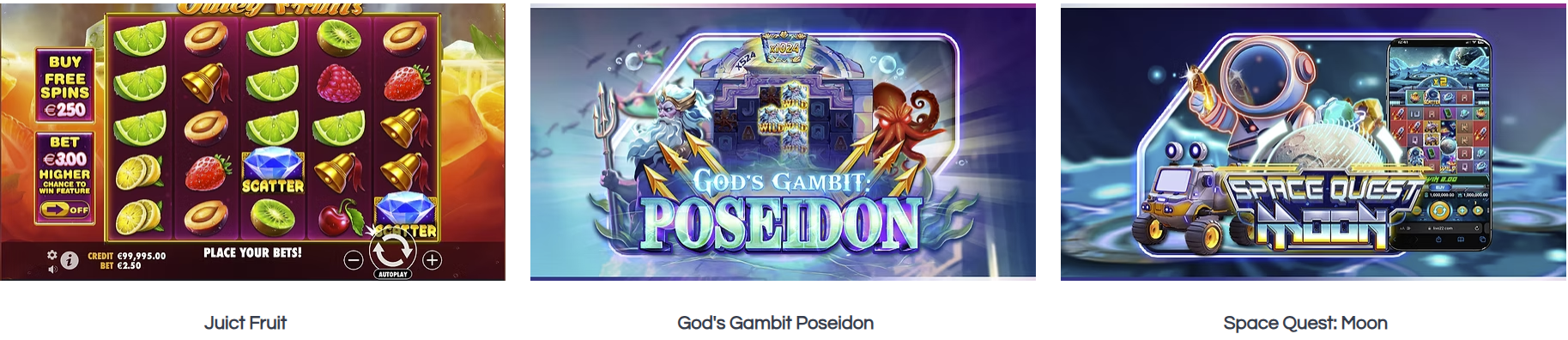
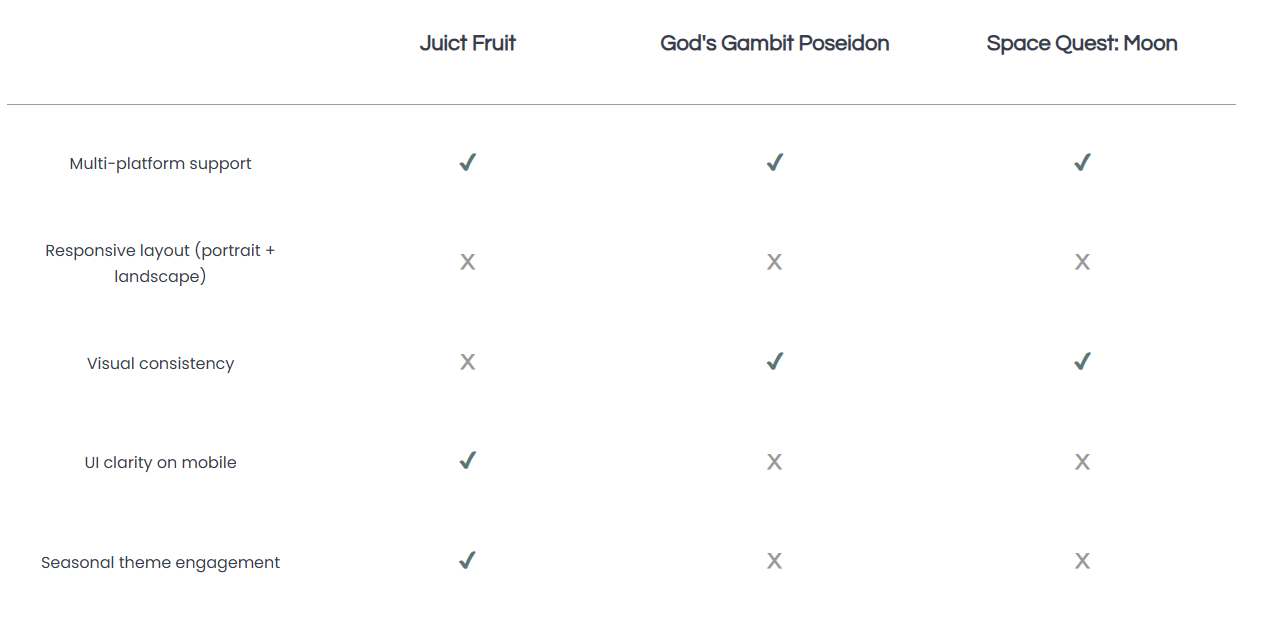
📊 Competitive Analysis
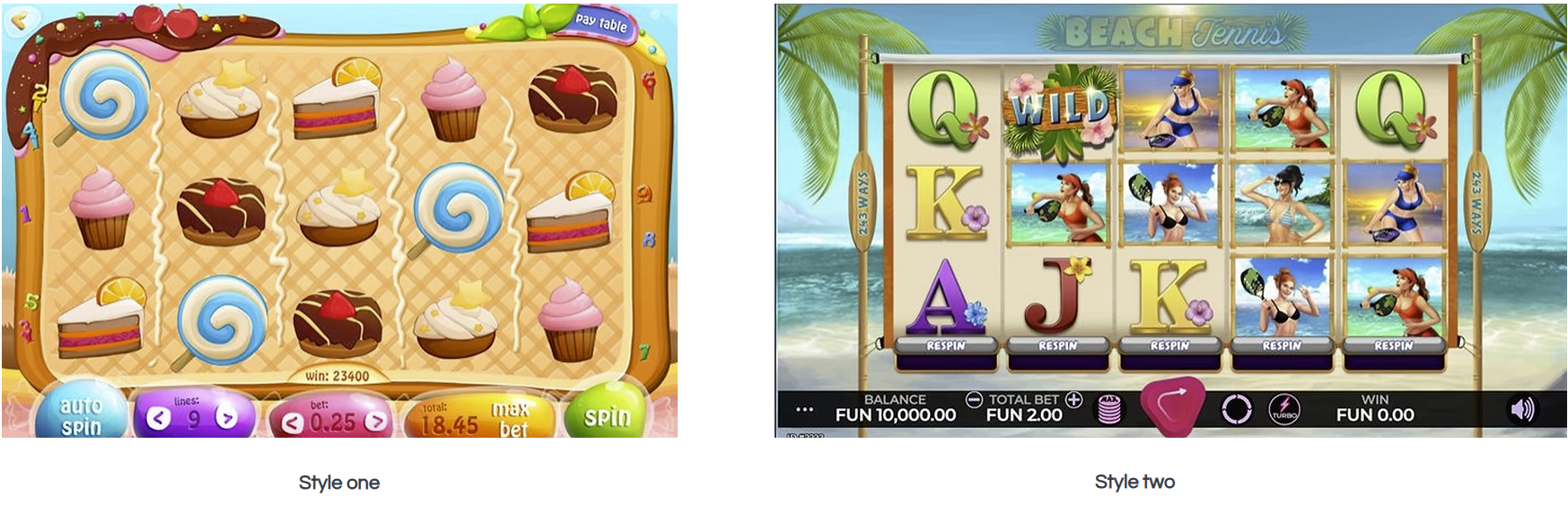
Conducting a competitive analysis helped us identify effective UX patterns and player expectations while uncovering opportunities for improvement. It also revealed common market trends, allowing us to define a more distinctive visual style and user experience that differentiates our game.
📊 Research Insights
Through competitive analysis, I found that while many slot games offer strong visuals and engaging gameplay, most lack responsive layouts, leading to inconsistent experiences across devices. This revealed an opportunity for Beach Party to stand out with a fully adaptive interface that ensures consistency and usability across all platforms.
Key Insights
💡 Player Insights
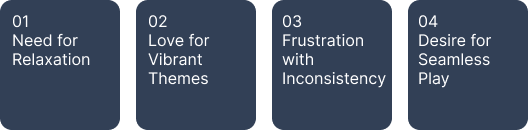
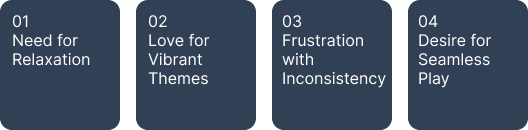
From my research, four key themes emerged around how players engage with slot games and what drives their enjoyment:
Players view slot games as light, stress-free entertainment.
Bright, seasonal visuals enhance emotional engagement.
Inconsistent layouts across devices disrupt flow and immersion.
Players expect a consistent, responsive experience across platforms.
Persona
Ideation
📐 Design Principles
From my research, four key themes emerged around how players engage with slot games and what drives their enjoyment:
Players view slot games as light, stress-free entertainment.
Bright, seasonal visuals enhance emotional engagement.
Inconsistent layouts across devices disrupt flow and immersion.
Players expect a consistent, responsive experience across platforms.
✅ Final Direction
I explored ways to improve cross-platform usability and engagement, focusing on layout adaptability and visual feedback.
I designed a responsive split-layout system to keep core actions (spin, bet, rewards) within ergonomic zones across PC and mobile, while adding subtle seasonal cues (waves, sunlight, beach elements) to reinforce wins.
These ideas were combined into the Responsive Beach Interface. Using a component-based system, the design adapts layout, spacing, and interactions across devices while maintaining a cohesive visual style—balancing usability with a relaxed, immersive theme.
DESIGN
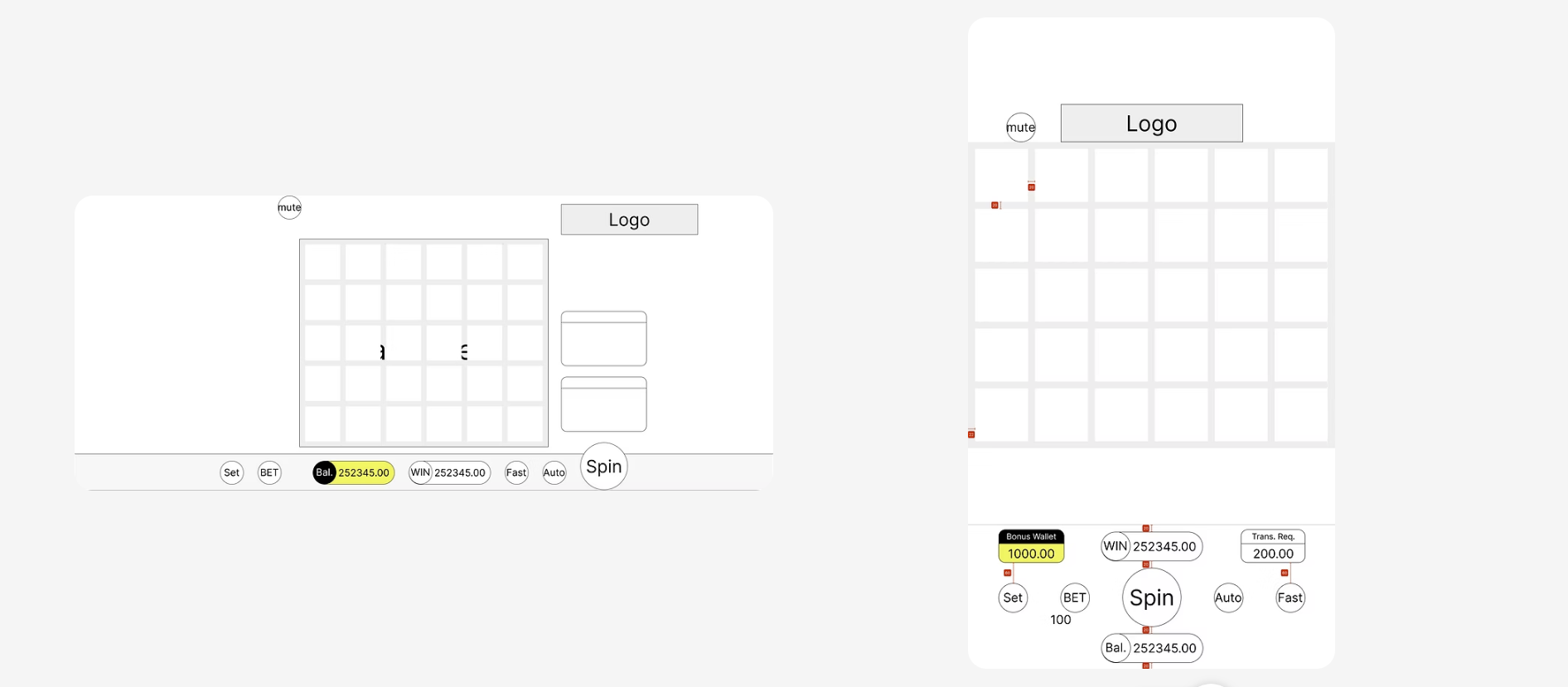
Low-Fidelity
The interface design focused on balancing visual excitement with cross-platform clarity.
The goal was to maintain the vibrant, summer-inspired atmosphere while ensuring all key actions — spinning, betting, and collecting rewards — remained accessible and readable on every screen size.
DESIGN
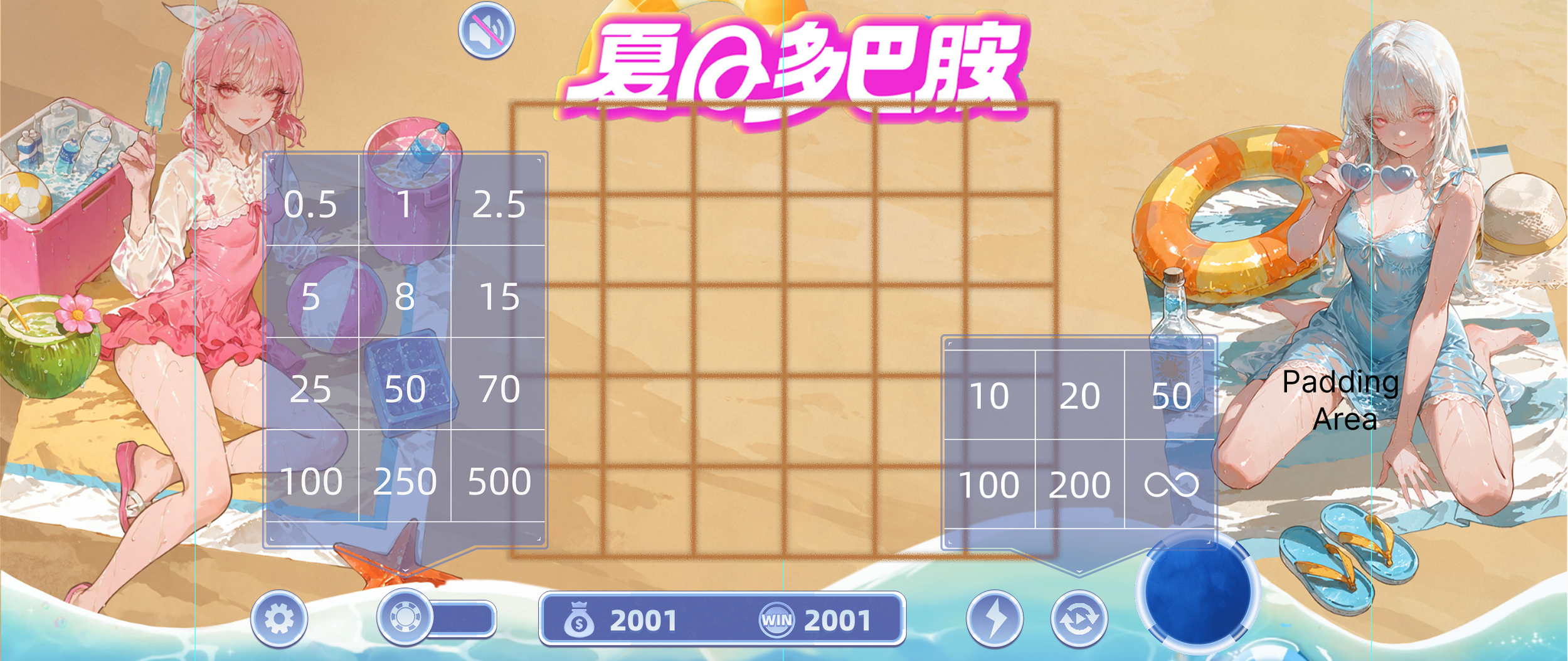
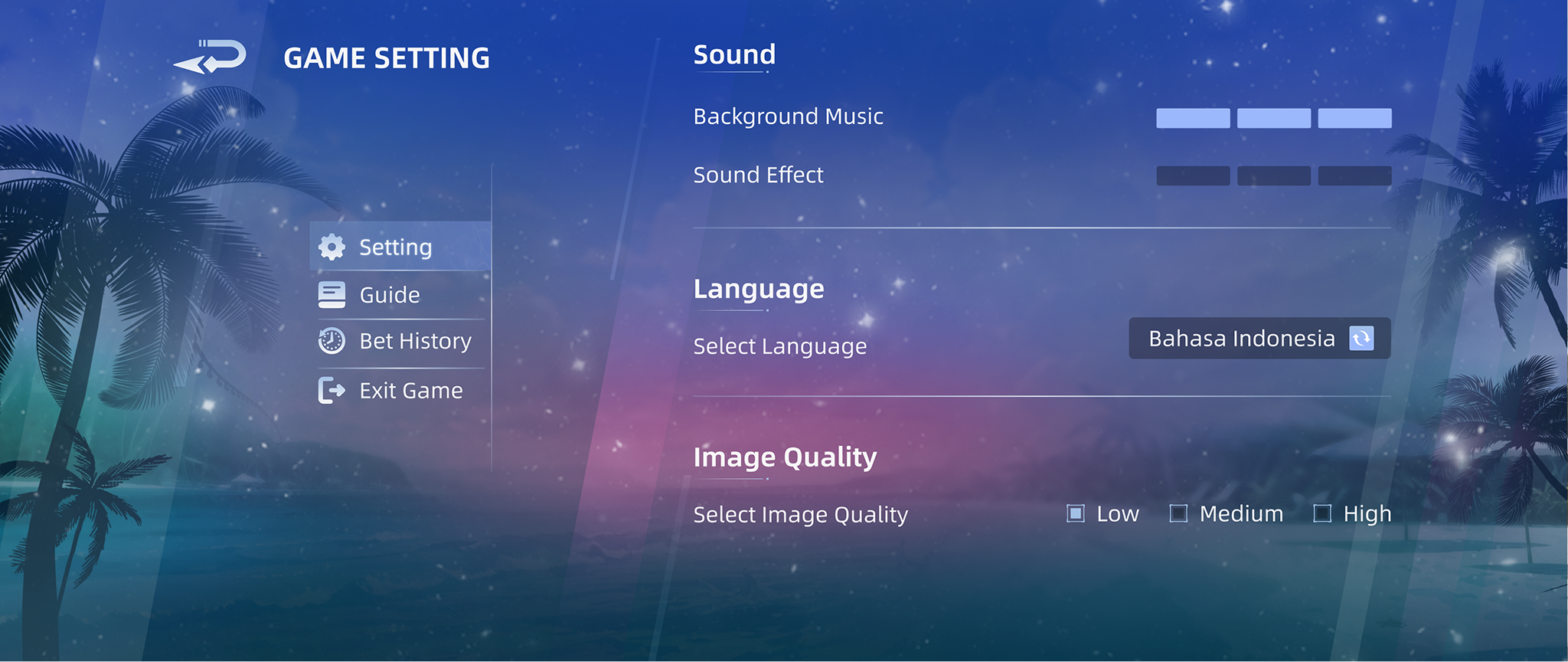
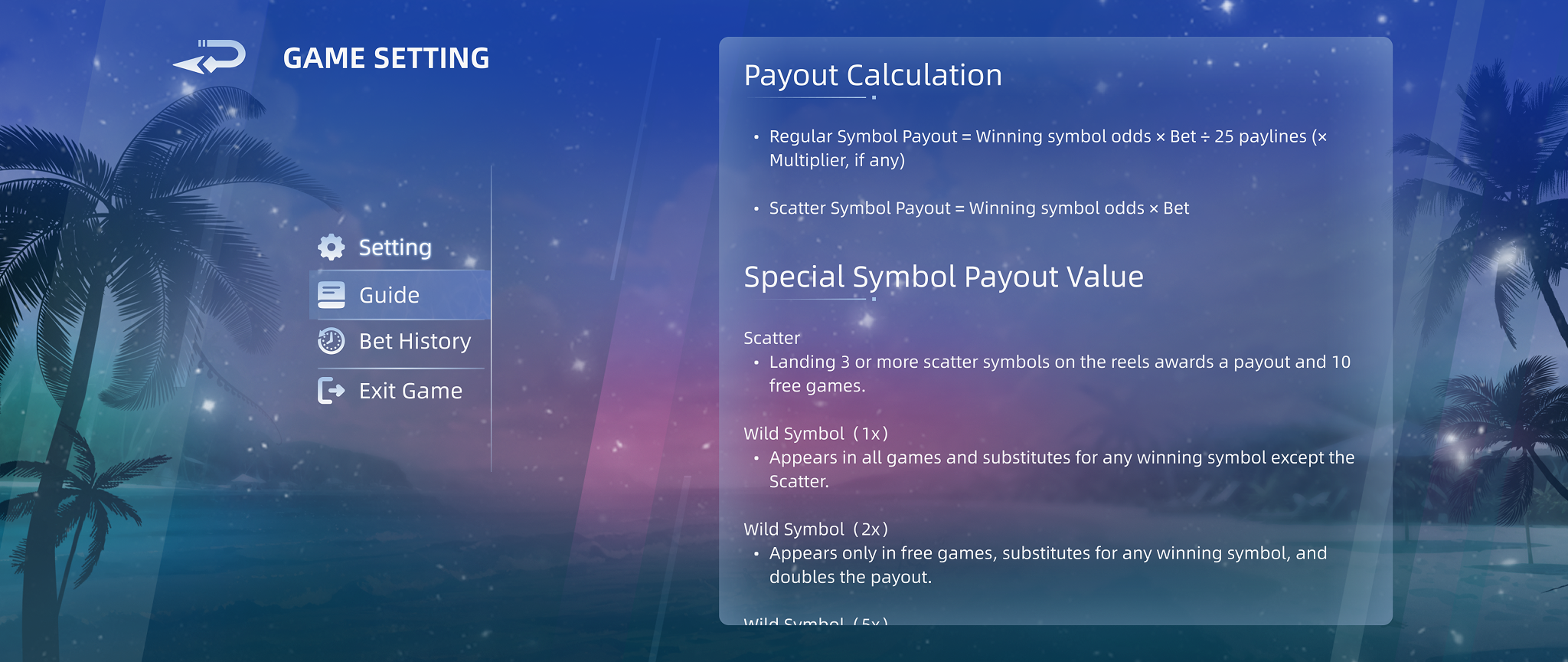
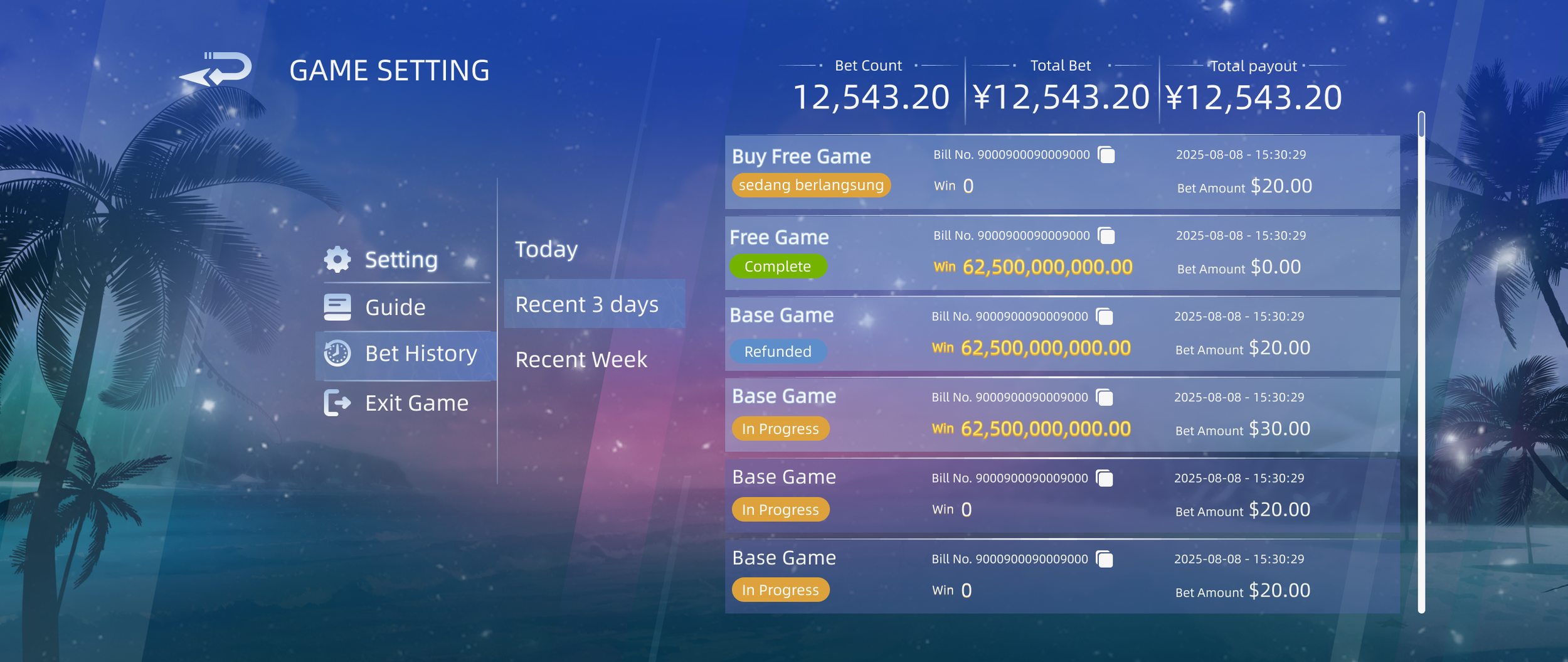
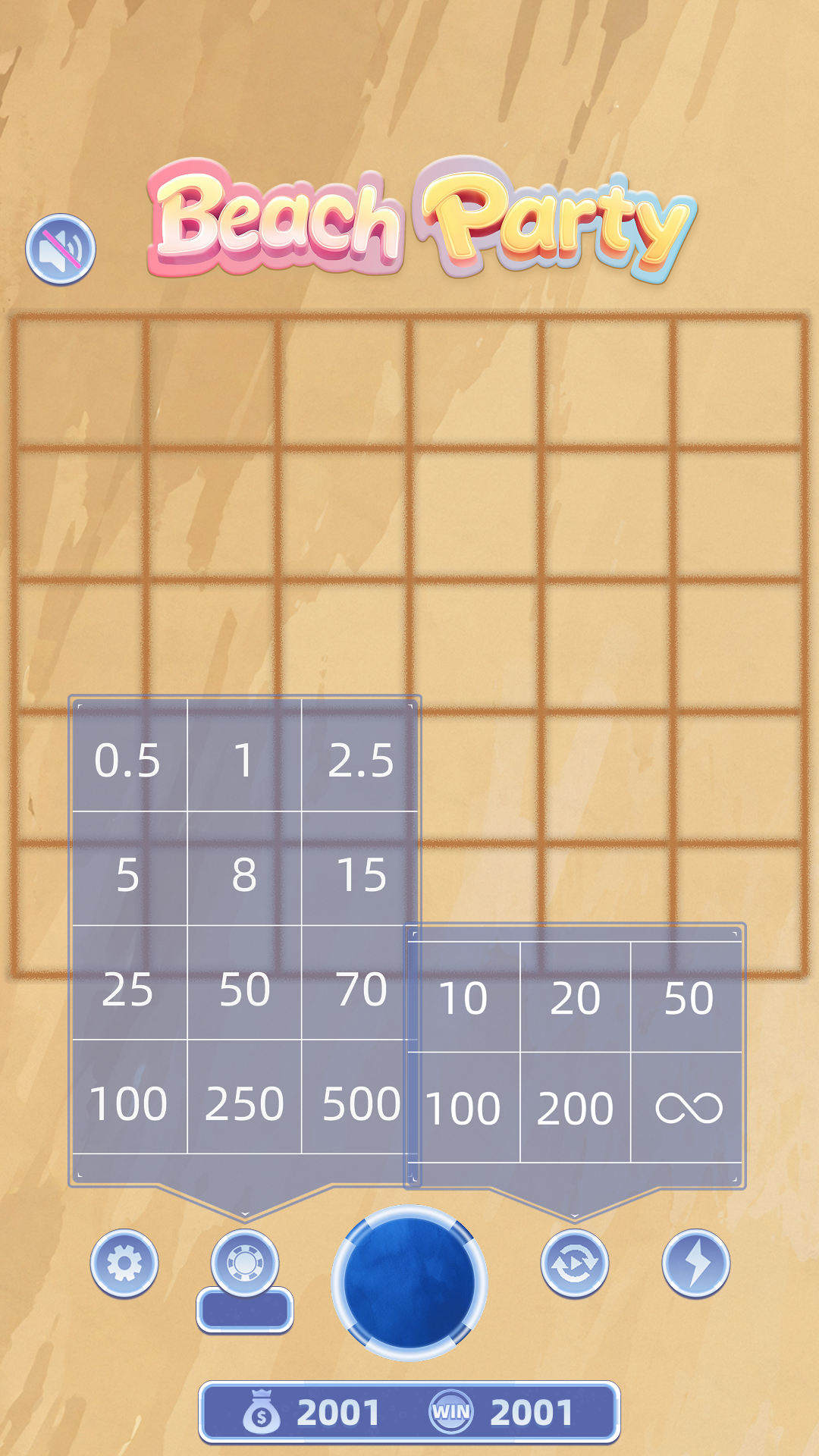
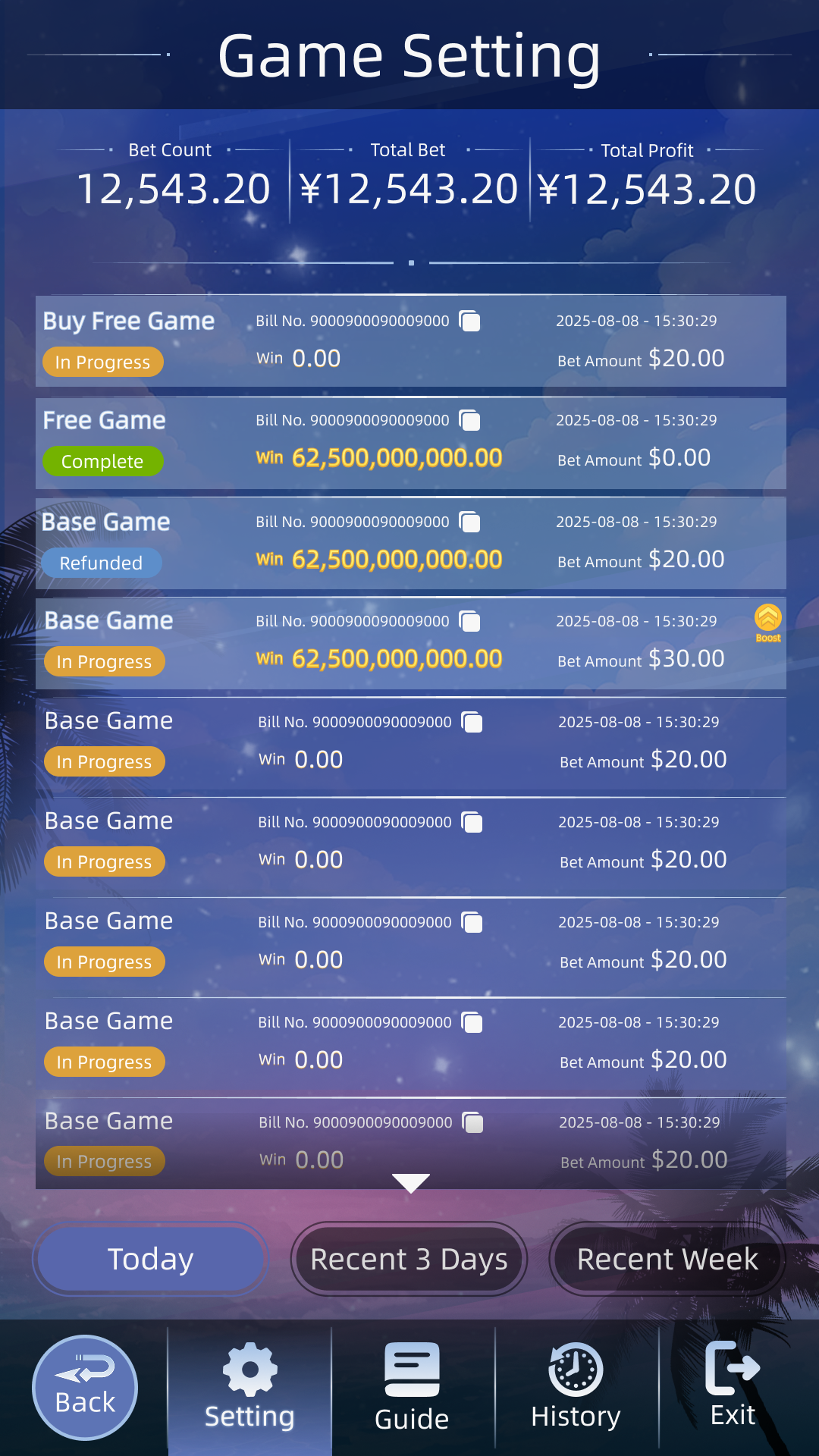
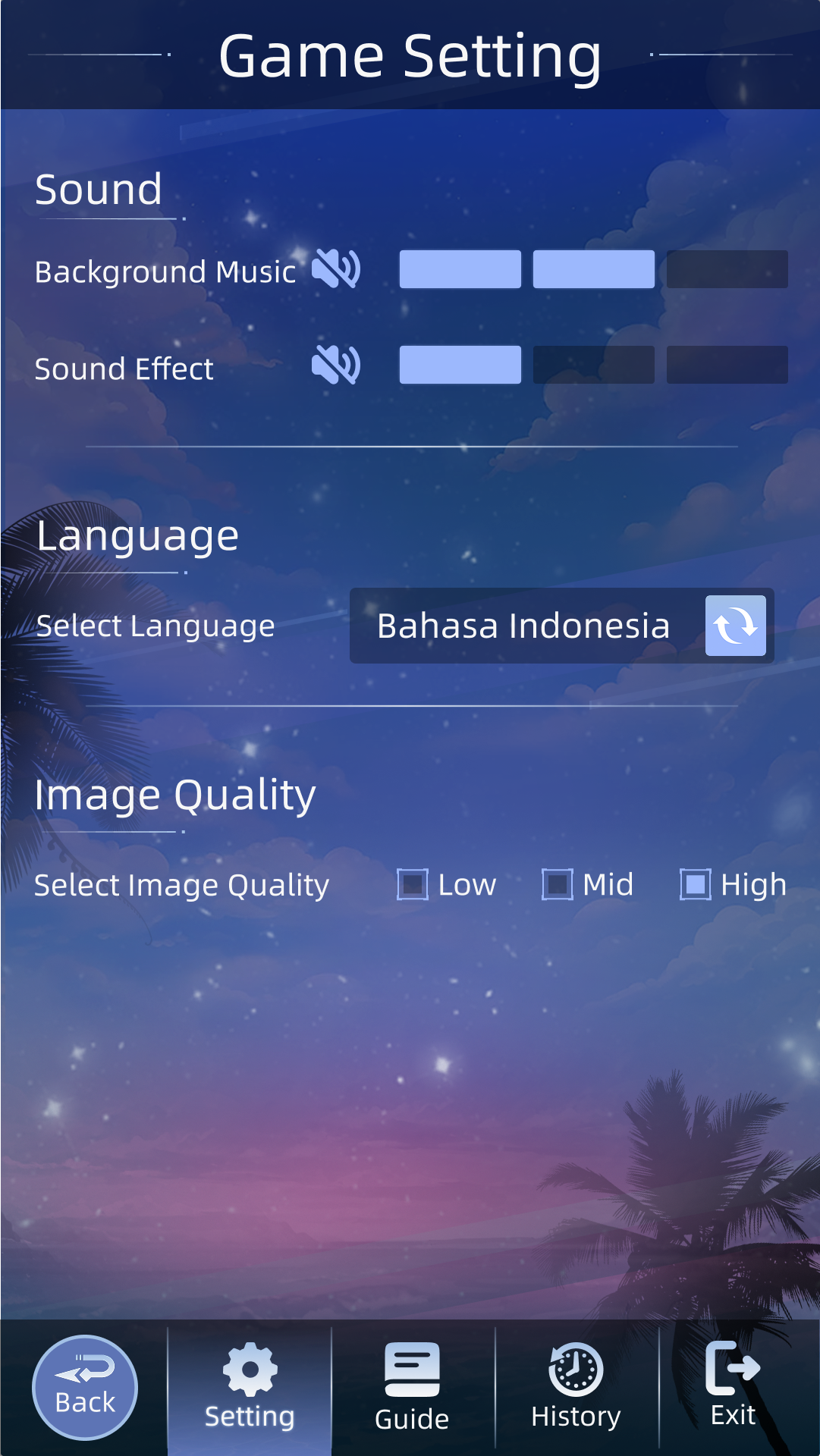
High-Fidelity V1
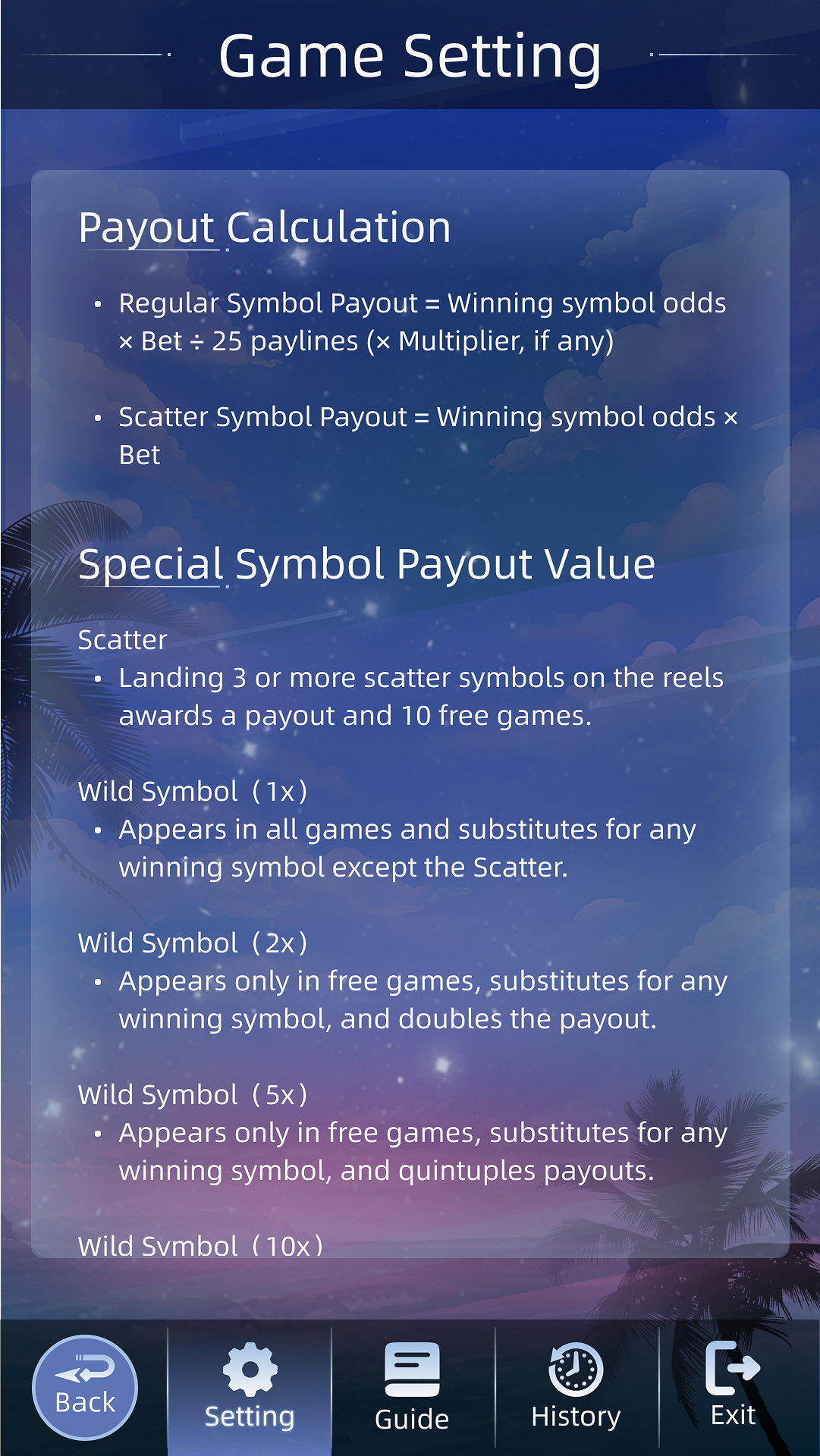
The high-fidelity design enhanced the visual system with richer colors, refined components, and interactive feedback to create a more immersive experience. Core actions remain clear, intuitive, and responsive across all devices.
Feedback
🧪 Usability Testing
I conducted usability testing with 6 casual slot players across mobile and PC. Overall, players found the game visually appealing, describing it as “fun” and “relaxing.”
Key improvements identified:
The visual tone felt too casual; players expected a more premium, reward-driven experience.
Inconsistency between menu and gameplay reduced overall polish.
Buttons lacked prominence on smaller screens, causing hesitation in key actions.
Iteration
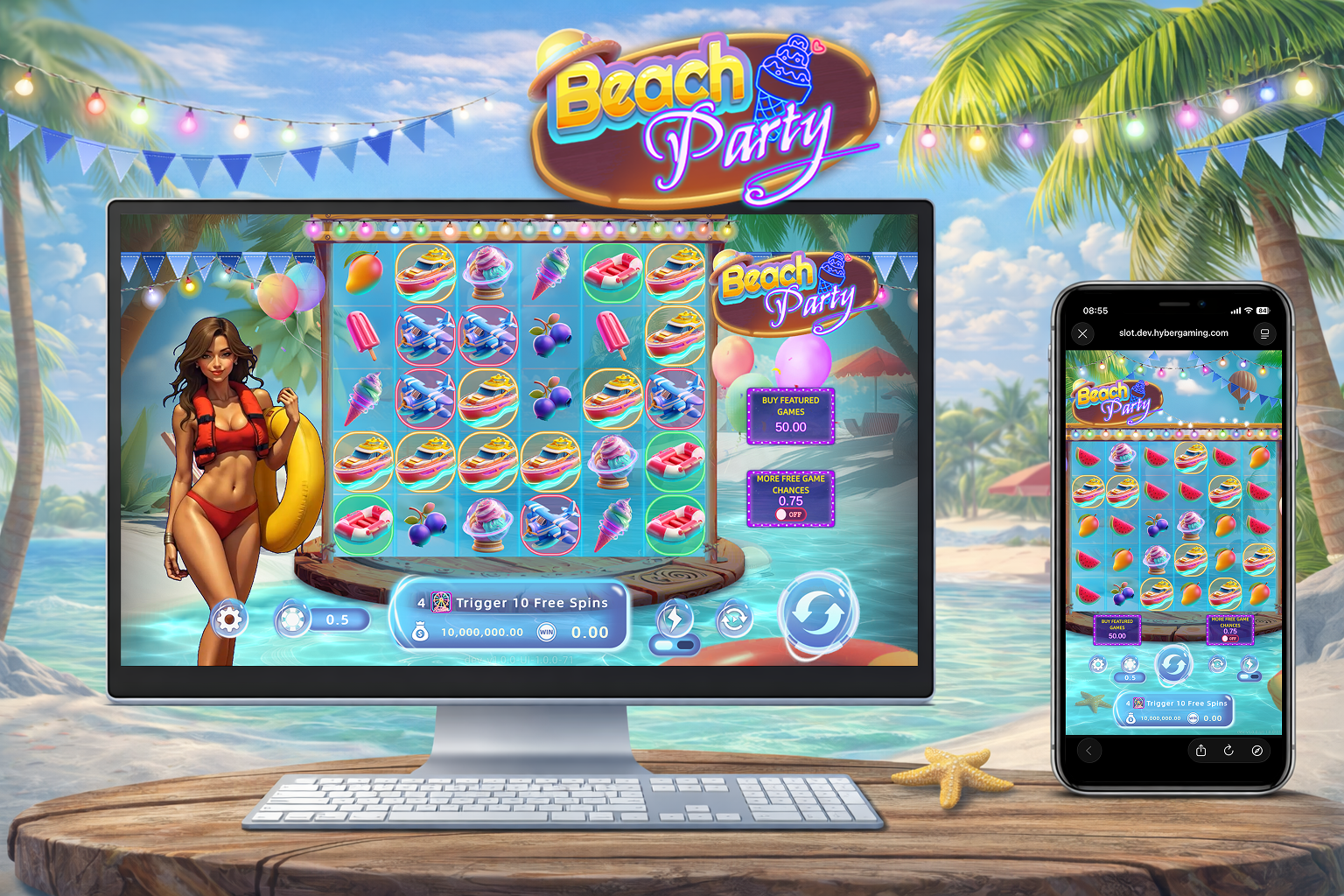
These insights informed the next iteration, where I refined the visual hierarchy, unified the visual direction, and enhanced button contrast and feedback to create a more premium experience.
Based on player feedback, we also introduced two new features to increase engagement and replayability:
Buy Free Game – instant access to Free Game mode
Double Chance – increased probability of triggering Free Game
These additions gave players more control and strengthened the game’s risk–reward experience.
Outcome
🚀 Upcoming Launch
The game will officially launch on April 1st. I’m looking forward to observing real player behavior and sharing insights once it goes live — stay tuned!
Takeaway
📈 Growth & Learnings
Through this project, I strengthened both my UI design skills and my ability to collaborate within a cross-functional team. Working closely with art, engineering, and production helped me better communicate design decisions and present work in a clear, implementation-ready way.
I also improved my Figma workflow by leveraging components, auto layout, and prototyping to work more efficiently and deliver higher-quality results.
Looking back, I identified opportunities to further refine my process, including better file organization, clearer naming conventions, and a more systematic component structure to improve developer handoff and team collaboration.
Prev
fAishion.ai
Next
Hybergaming