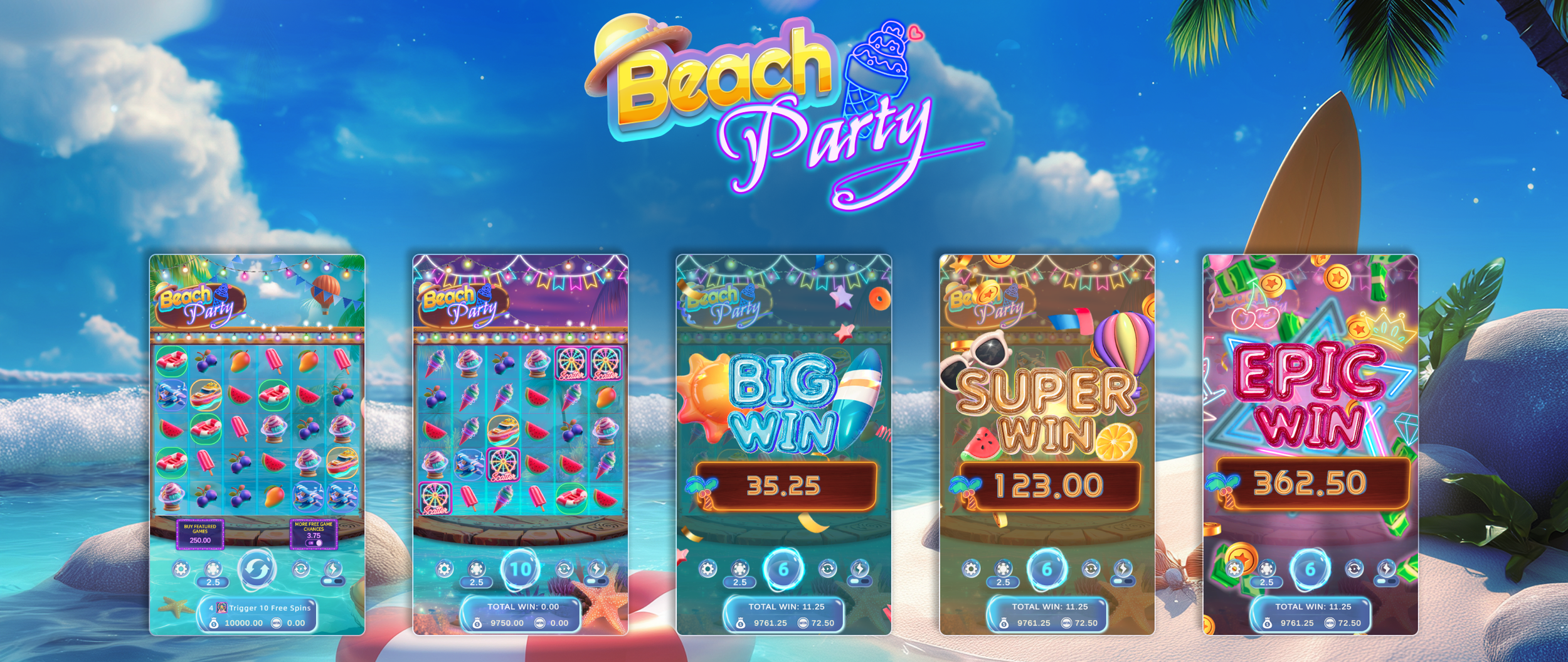
REIMAGINING CROSS-PLATFORM SLOT PLAY
Designing a modern beach-themed slot experience across desktop and mobile that went on to generate five-digit monthly revenue
Bitus Labs wanted to establish a new slot game IP that felt fresher and more visually engaging than traditional casino-style products. Beach Party became the first title developed under this direction for desktop, tablet, and mobile.
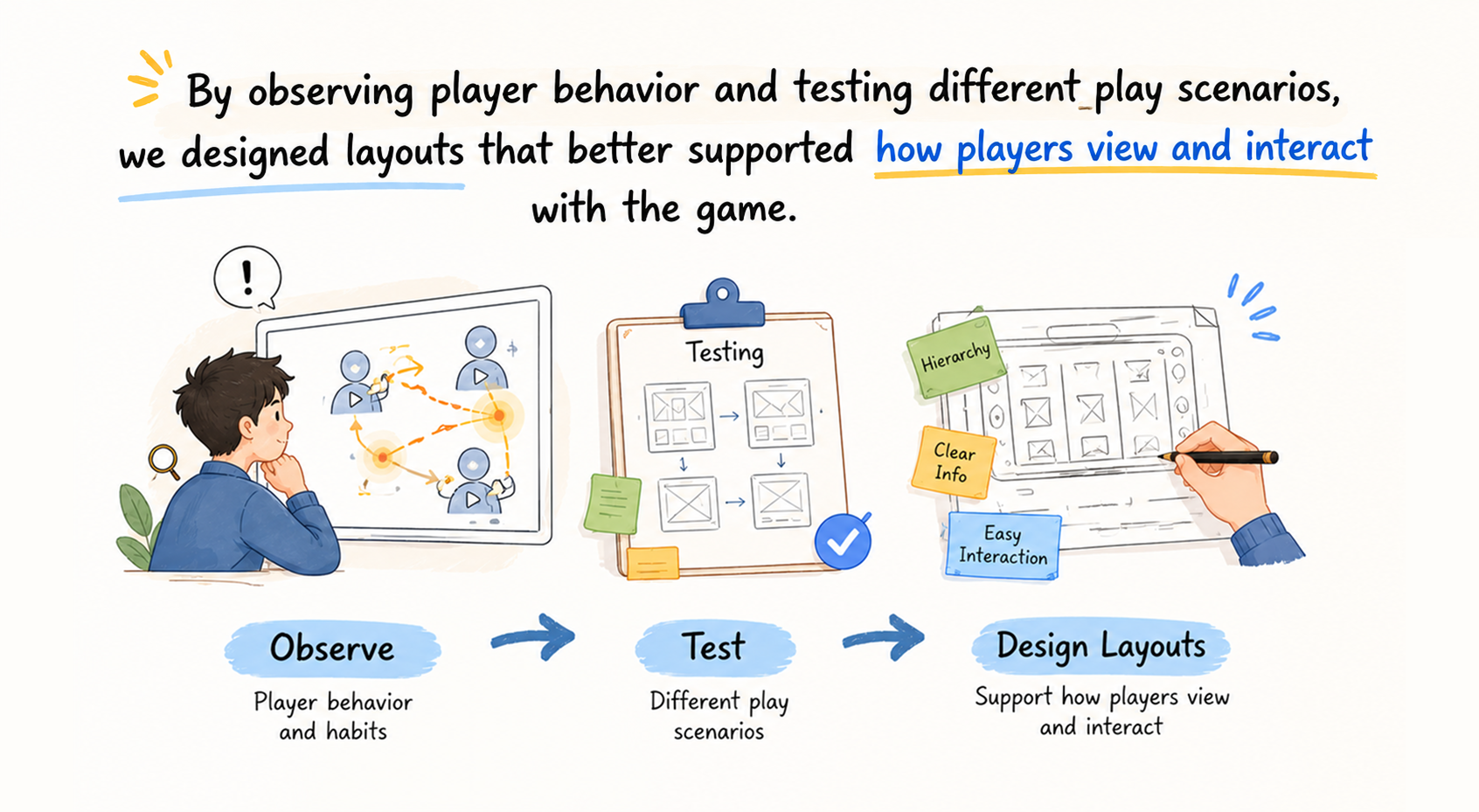
During the four-week development cycle, I stepped in as the temporary UI/UX Lead and owned the end-to-end UI/UX process, from research and responsive layout exploration to usability testing, iteration, and developer handoff.
BACKGROUND
UI/UX Designer, Temporary UI/UX Lead
ROLE
Product Manager, Engineer and Game Artist
TEAM
TIMELINE
4 Weeks
Competitive Research, Interaction Design, Responsive UI, Visual Direction, Usability Testing, Iteration
SCOPE
BUSINESS NEED
Create a younger, more modern slot game IP that stands out from traditional casino-style products.
CHALLENGE
How might we make a slot game feel modern and playful while keeping gameplay clear and familiar?
RESEARCH
I conducted the research in two stages.
Discovery Research
I reviewed three existing slot games across portrait and landscape modes and gathered early feedback from casual slot players to identify common usability and positioning gaps.
Validation Testing
After completing the first high-fidelity direction, I tested the mobile and desktop experience with six casual slot players to evaluate gameplay clarity, action hierarchy, and visual appeal.
Research goals
How do existing slot games adapt gameplay across portrait and landscape modes?
How can core gameplay actions remain recognizable and accessible across screen sizes?
Which visual and interaction patterns make current slot experiences feel dated or difficult to use?
To guide the design direction, I explored how existing slot games organize gameplay, adapt across devices, and communicate their visual identity.
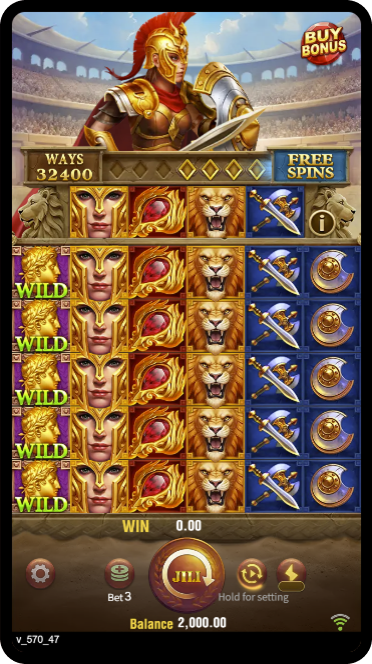
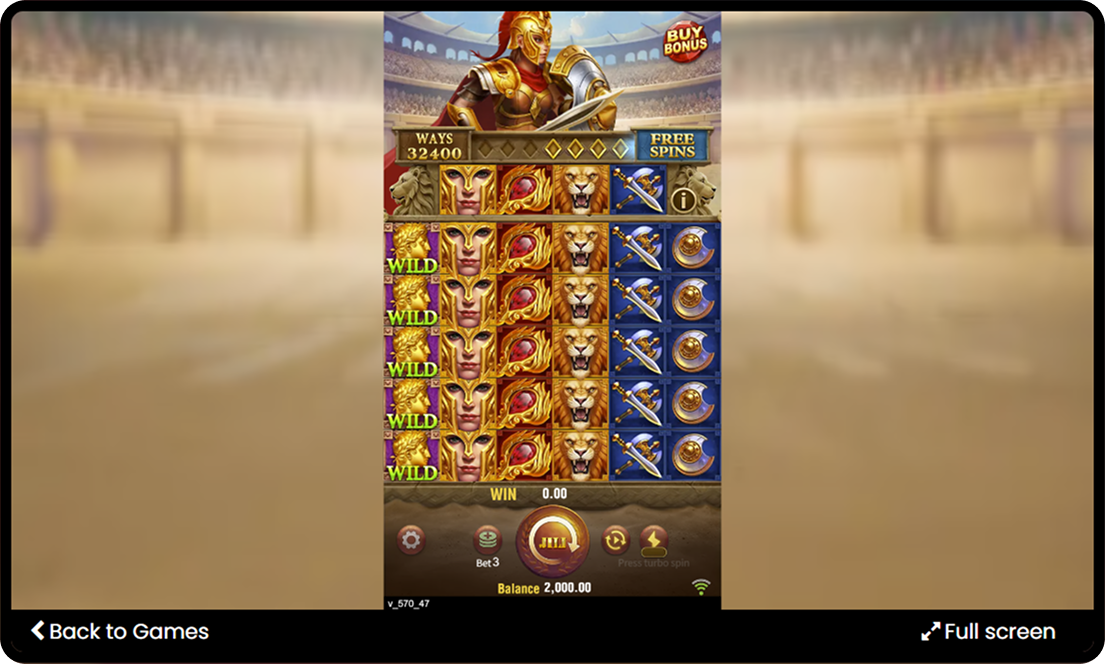
The game technically supported landscape mode, but retained a portrait-oriented gameplay canvas. This left unused horizontal space, reduced the relative size of the reels, and made important controls more difficult to scan.
Player Feedback
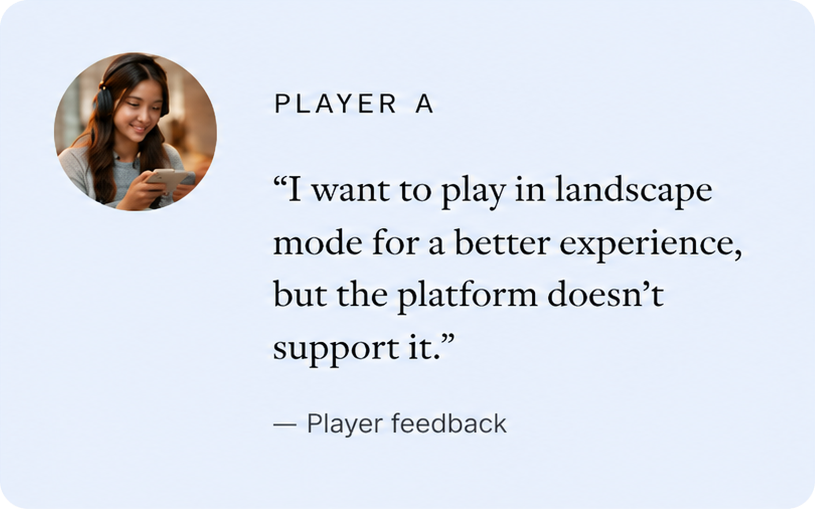
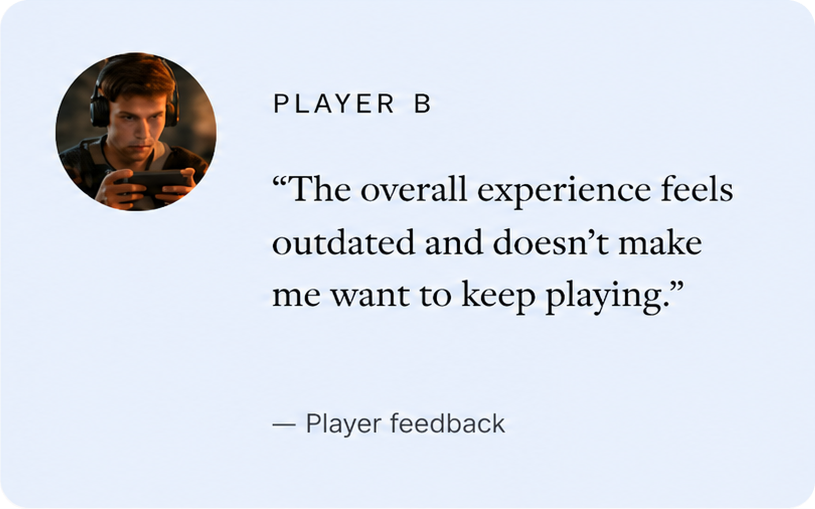
I asked casual slot players to review existing mobile experiences and describe the limitations they encountered when switching between portrait and landscape play.
Participant A · mobile slot player
Participant B · desktop and mobile slot player
Competitive Analysis
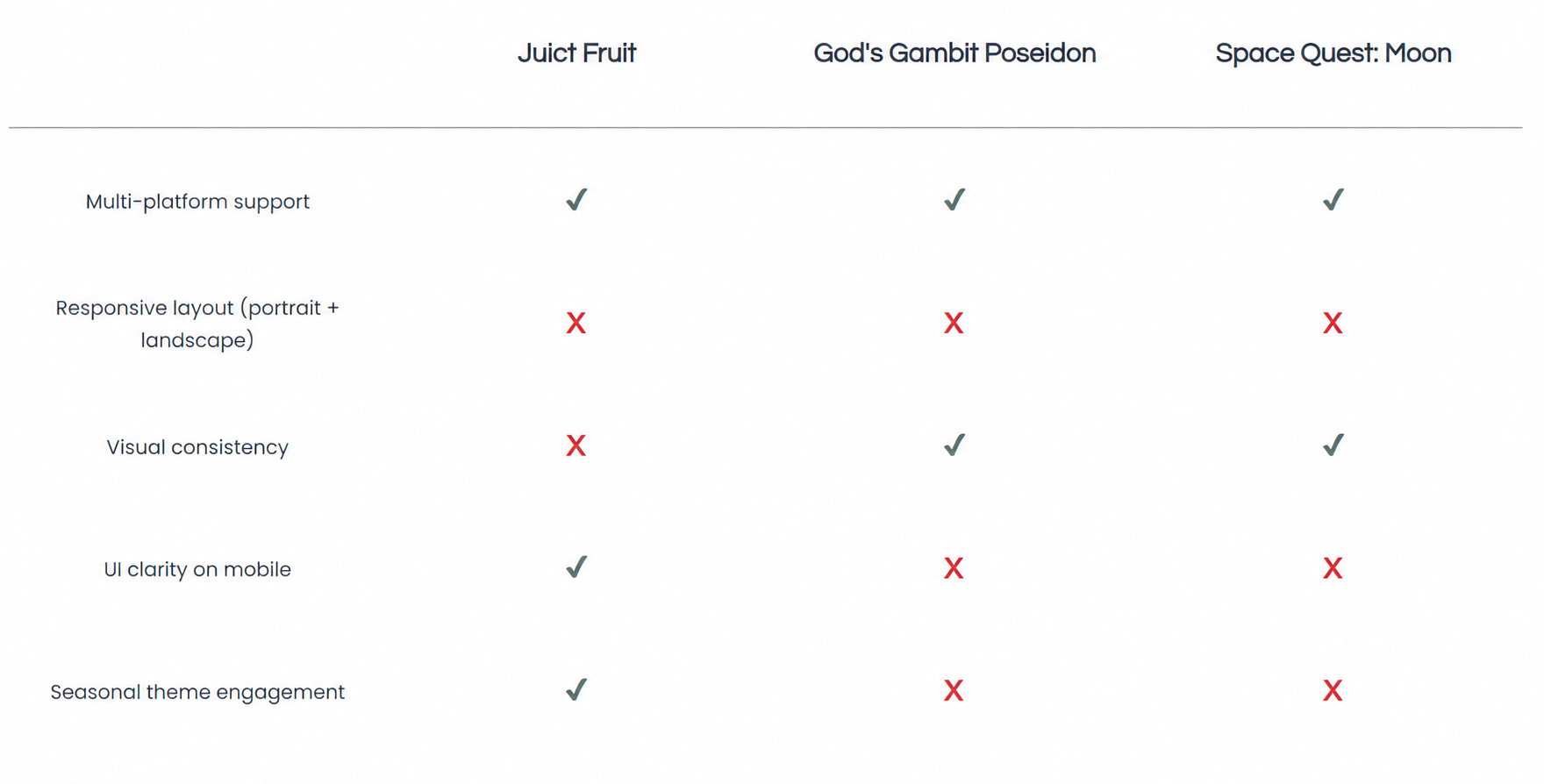
I analyzed three popular slot games that players commonly engage with to better understand current design patterns and experience gaps.

What I Observed
Cross-device support did not guarantee responsive design
Several products could run across devices but continued using a portrait-oriented structure in landscape mode.
Core controls were recognizable but often crowded
Betting, auto-play, speed, and spin controls competed for attention on smaller screens.
Visual themes were recognizable but frequently conventional
Most products used familiar casino patterns, leaving room for a brighter seasonal identity.
Key Takeaways
Adapt, Don’t Resize
Portrait and landscape modes require different control arrangements rather than scaled versions of the same interface.
Protect the Core Gameplay Loop
Spin, bet, balance, winnings, speed, and auto-play must remain recognizable across screen sizes.
STRATEGY
The research showed that Beach Party needed to be intentionally designed for each play context rather than simply resized across screens.
Design Principles
Celebrate Winning Moments
Use visual effects and feedback to make wins feel exciting and rewarding.
Make Modern Feel Simple
Create a fresh visual style while keeping the UI clear and easy to understand.
Keep Gameplay Fast and Low-Friction
Minimize interruptions and support quick, effortless interactions.
Design for Long Play Comfort
Keep visuals and UI elements comfortable to view during extended gameplay.
Final Direction
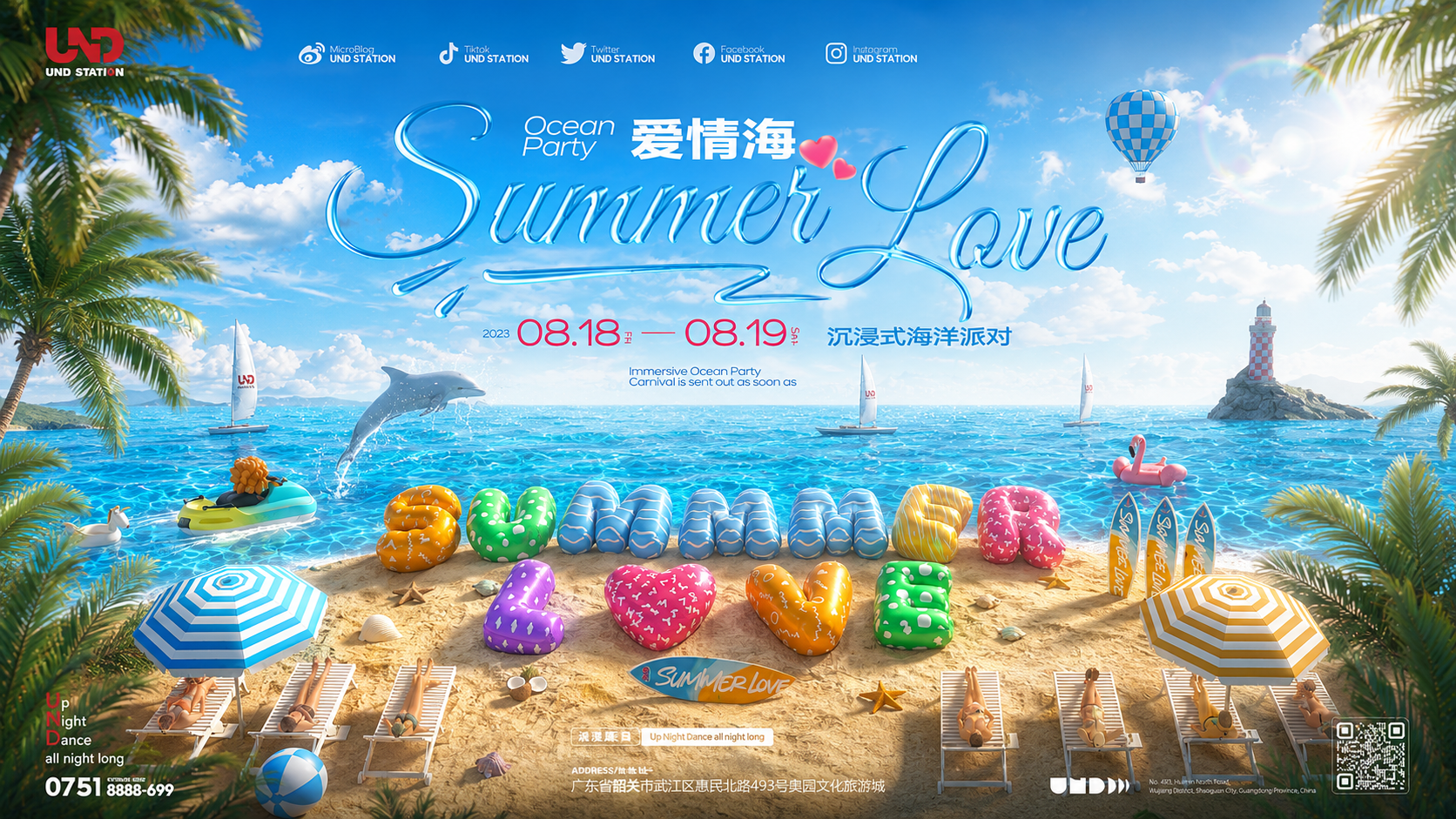
Through team discussions and market research, we identified an opportunity for a modern beach-themed slot game that aligned with the summer launch window.
DESIGN
Low-Fidelity
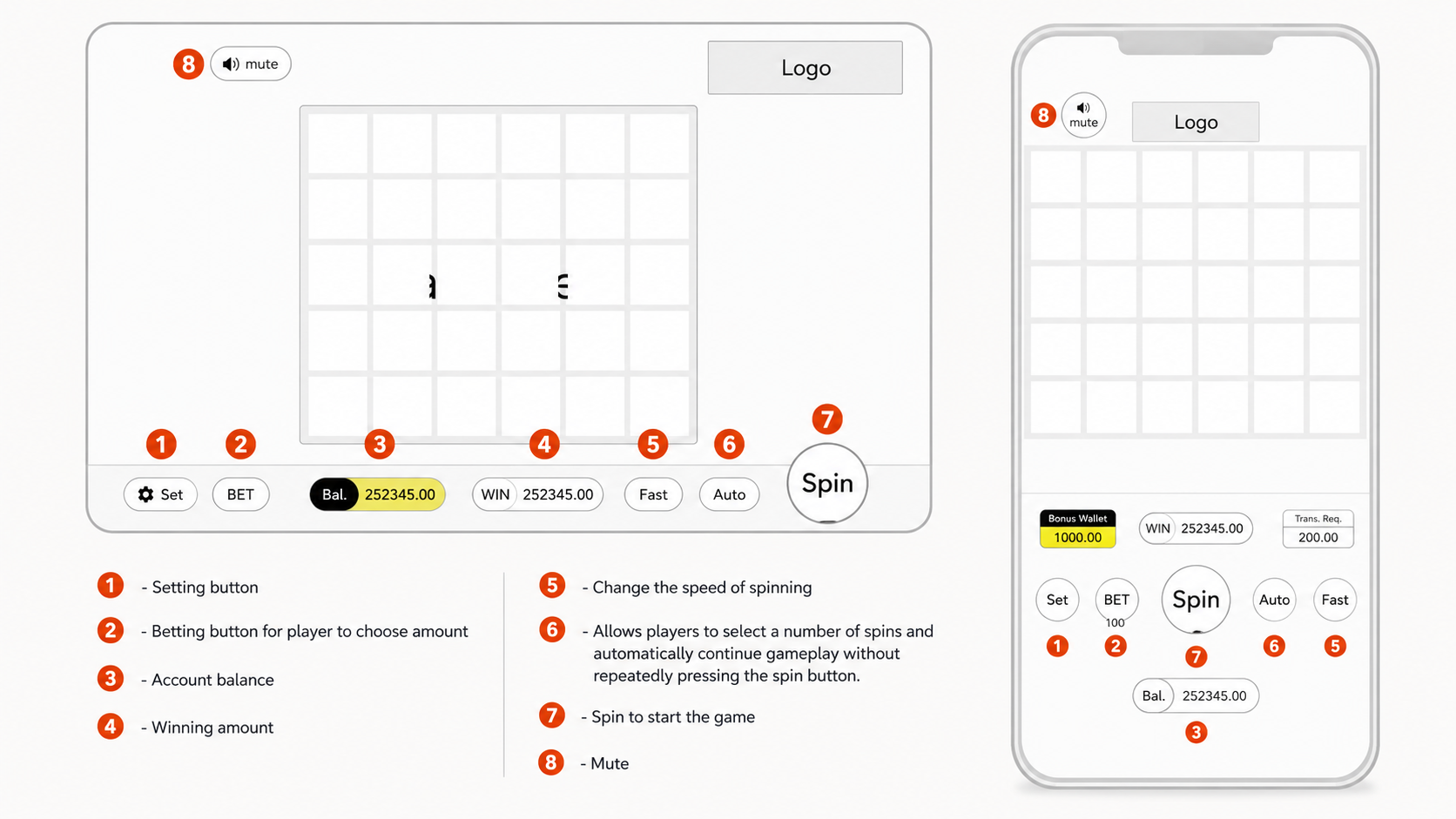
Desktop / Landscape
Used the additional width to separate gameplay information from primary controls
Grouped Bet, Auto, and Speed as supporting actions
Kept Spin visually and spatially dominant
Preserved a larger central reel area
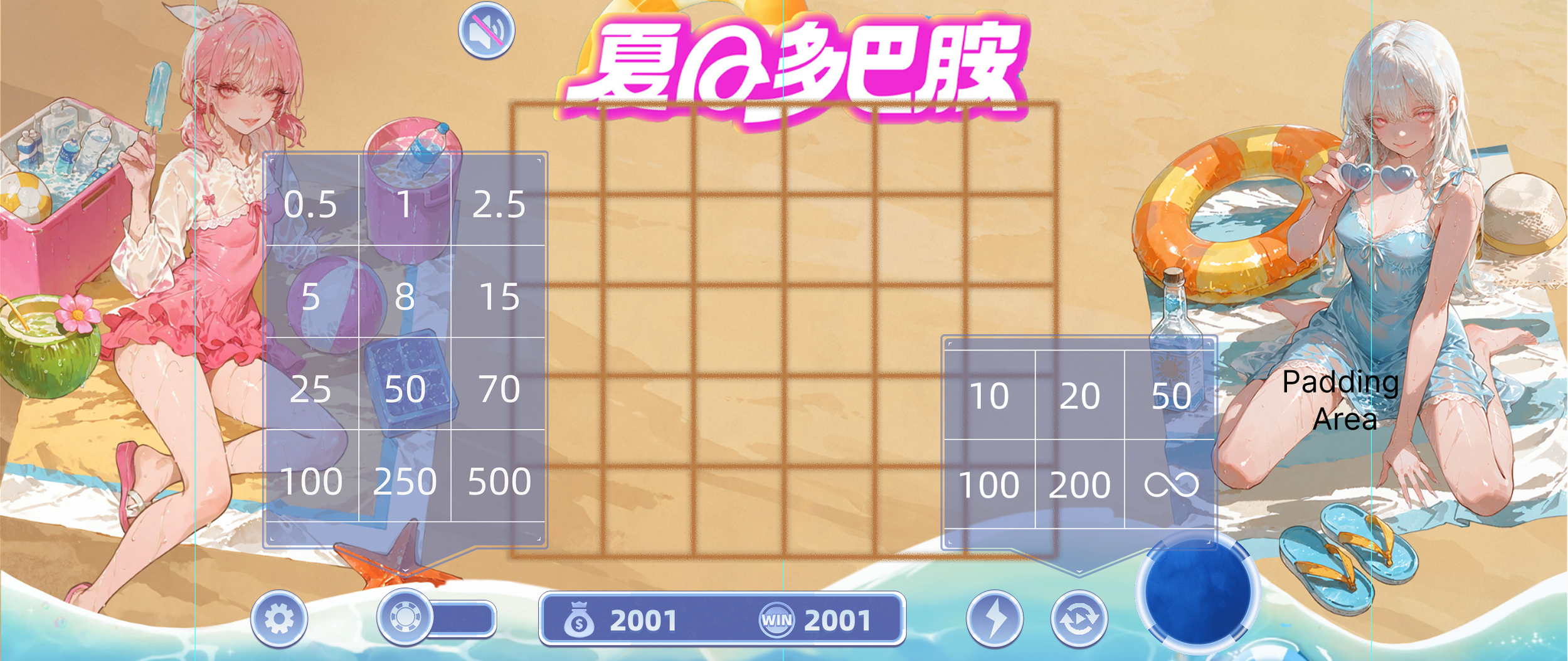
High-Fidelity V1 (Limited Player Appeal)
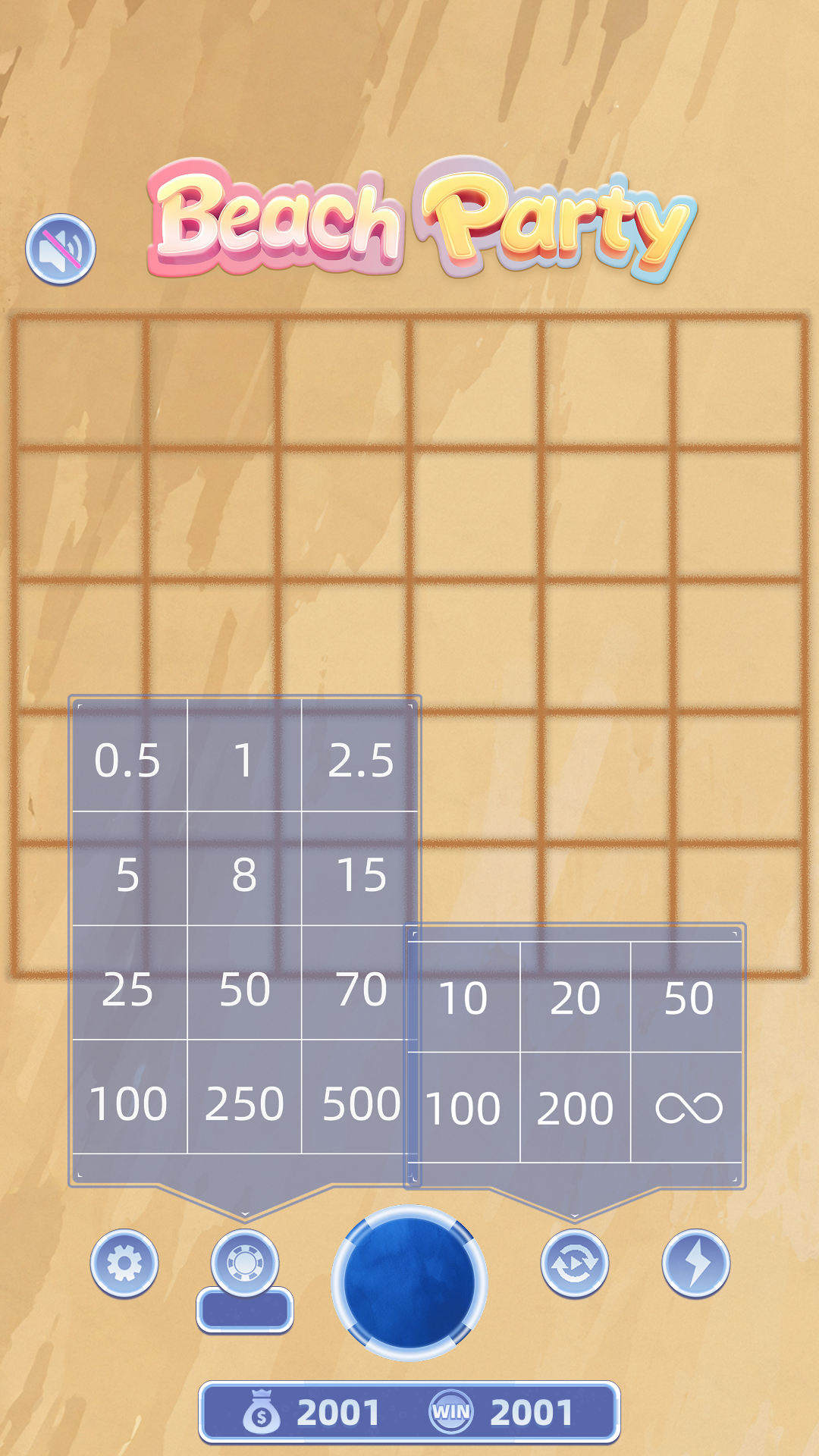
The first direction introduced a lighter anime-inspired beach aesthetic and adapted the gameplay controls across portrait and landscape modes. Although it felt more playful than traditional slot interfaces, it did not create the intended product identity or action hierarchy.
ITERATION
Mobile / Portrait
Moved core controls into the lower thumb-reach area
Enlarged the primary action
Reduced the visual weight of secondary controls
Stacked balance and win information to preserve reel visibility
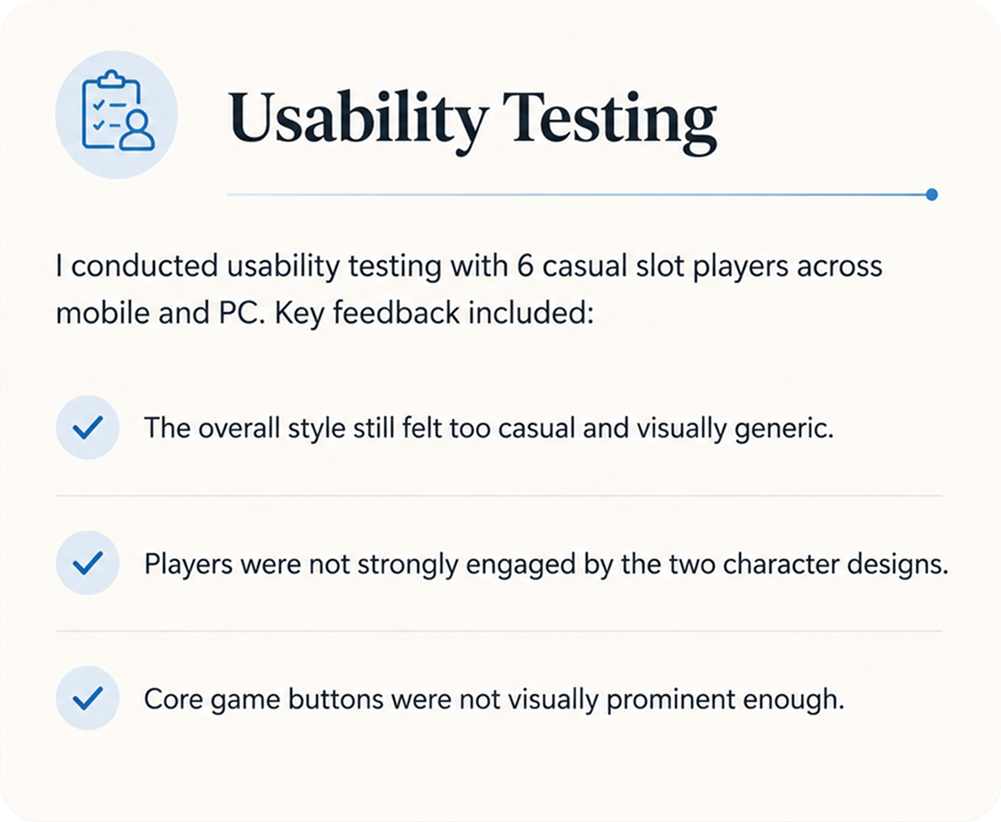
Based on the testing findings, I strengthened the gameplay hierarchy, replaced the character direction, and developed a more distinctive beach-party visual system. The revised interface used stronger contrast, clearer control grouping, deeper layering, and more differentiated reward states.
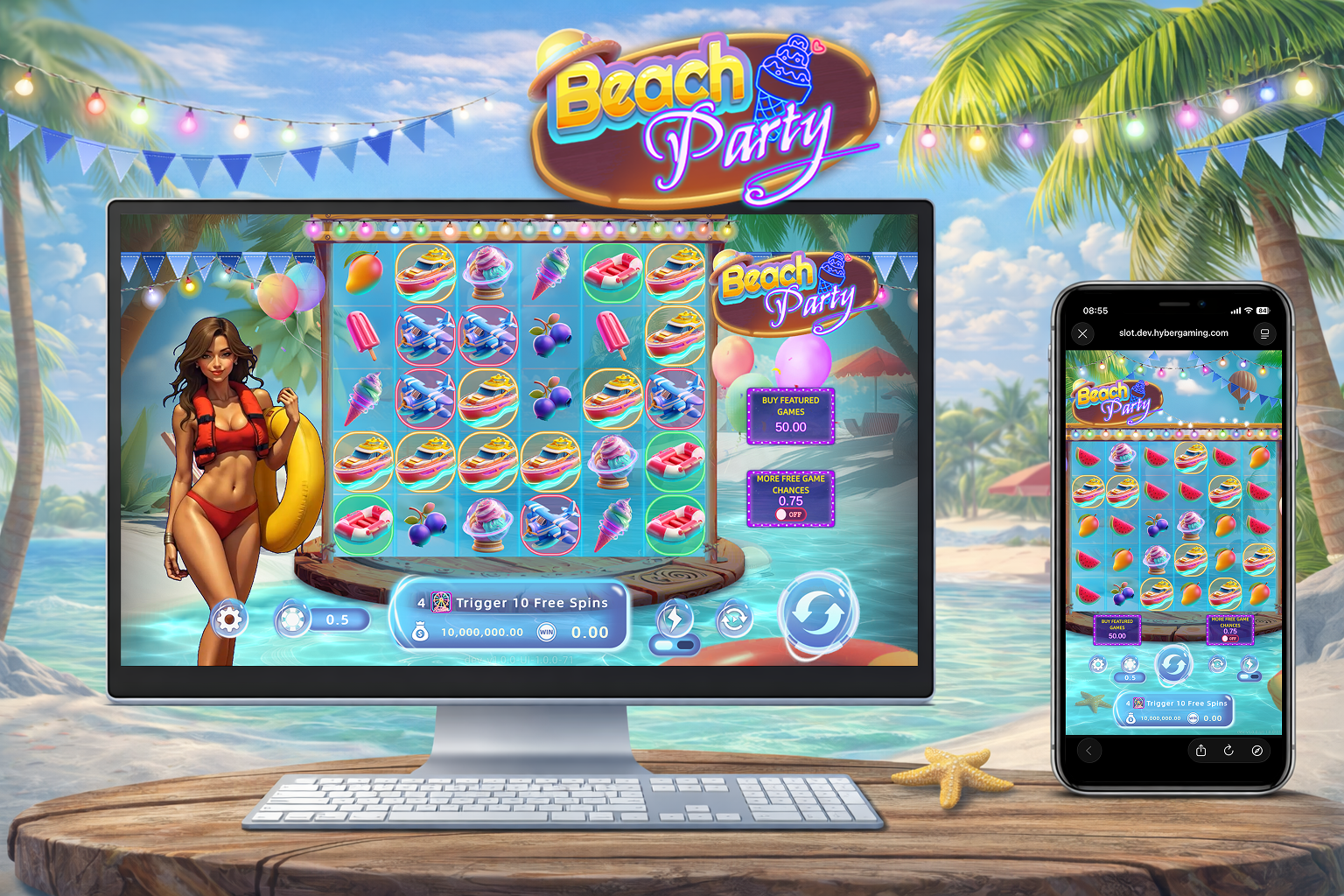
FINAL DESIGN
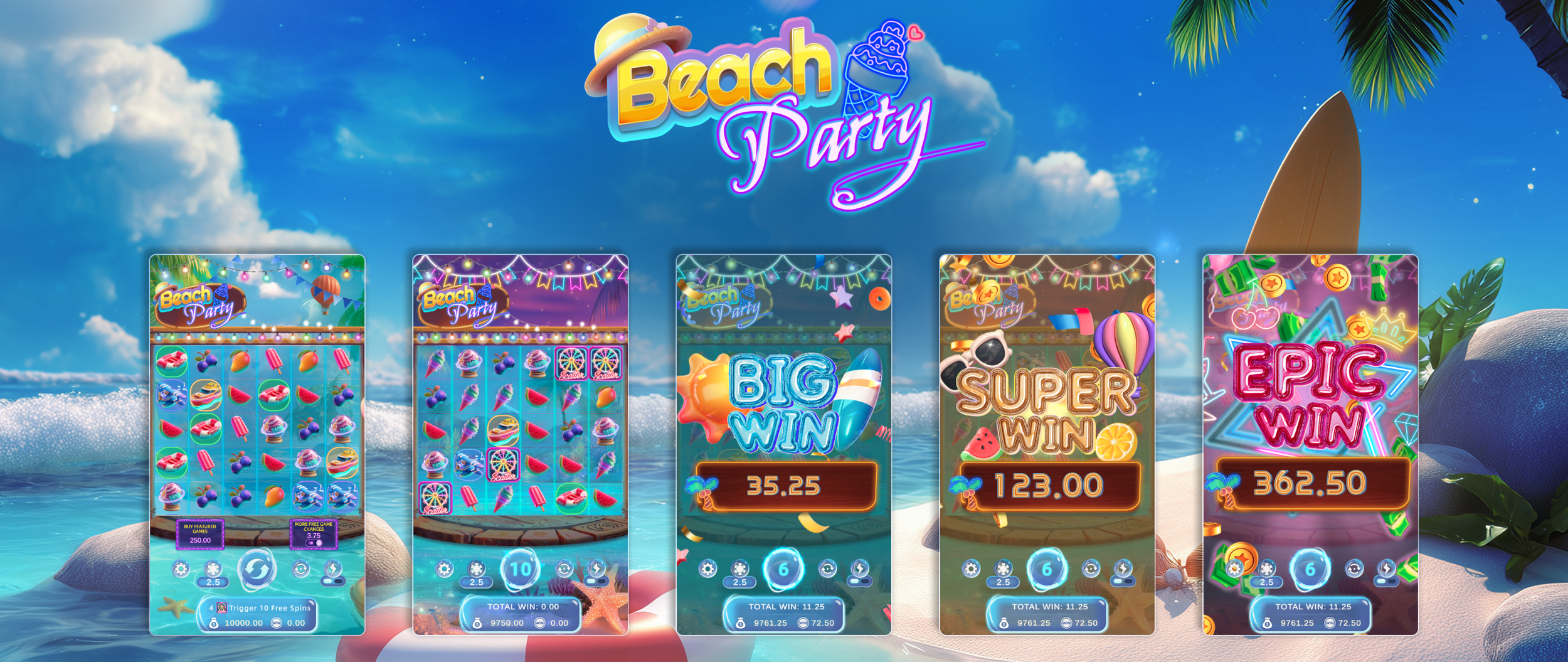
IMPACT
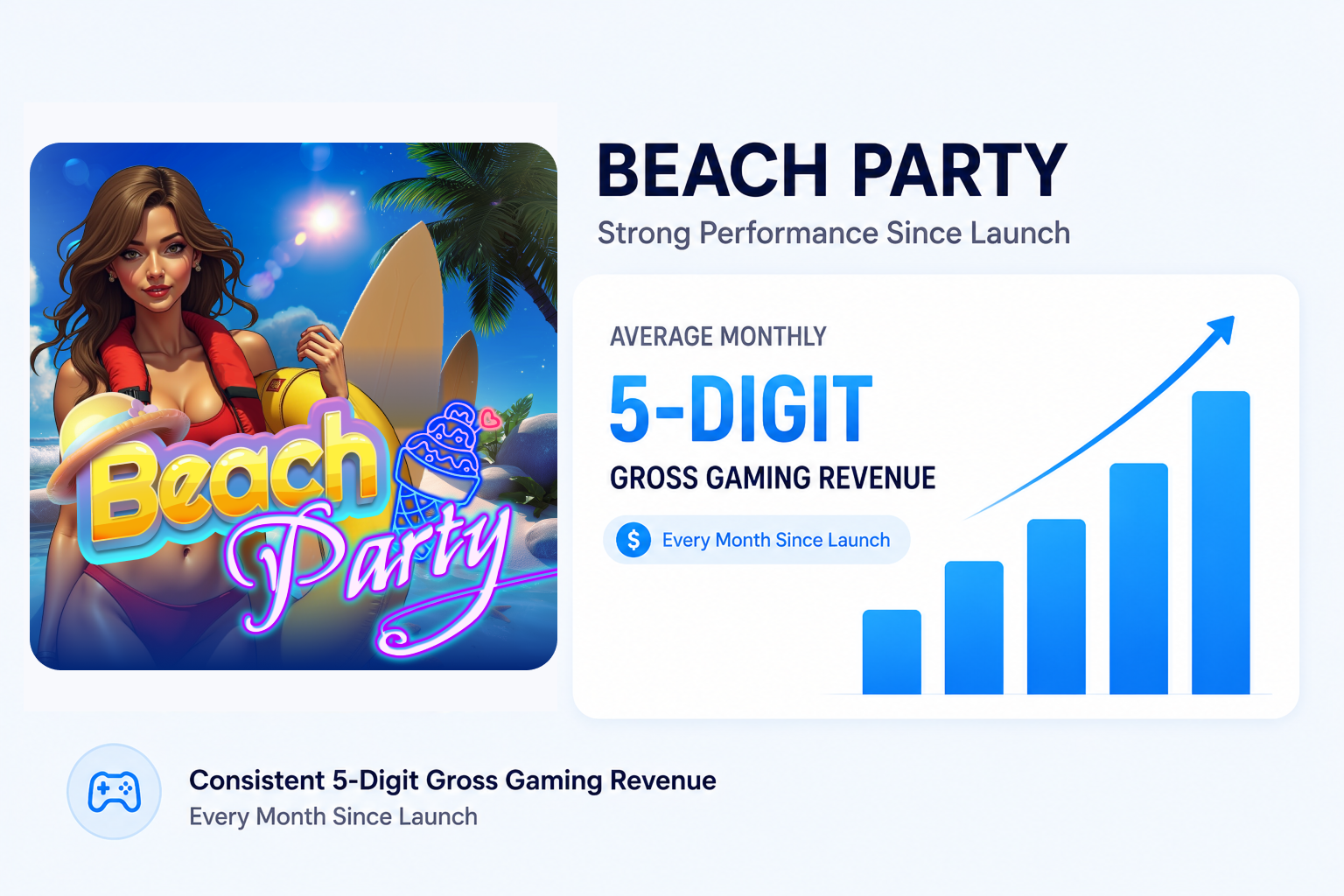
Beach Party launched on April 1, 2026 and generated five-digit monthly Gross Gaming Revenue during each of its first three months in market. The commercial result was influenced by the full product, distribution, game mechanics, and business strategy. My design contribution focused on establishing a distinctive visual identity, improving core action clarity, and creating adaptable layouts across desktop and mobile.
Takeaway
Deepened my understanding of player behavior through research, testing, and gameplay observation.
Learned to better connect UI design with product direction, visual positioning, and gameplay experience.
Gained leadership experience by stepping in as a temporary UI/UX Lead and collaborating across teams.
2026
Making cross-border shipping easier to track
Designed a logistics app that centralizes order updates and makes shipment progress more transparent.