BACKGROUND
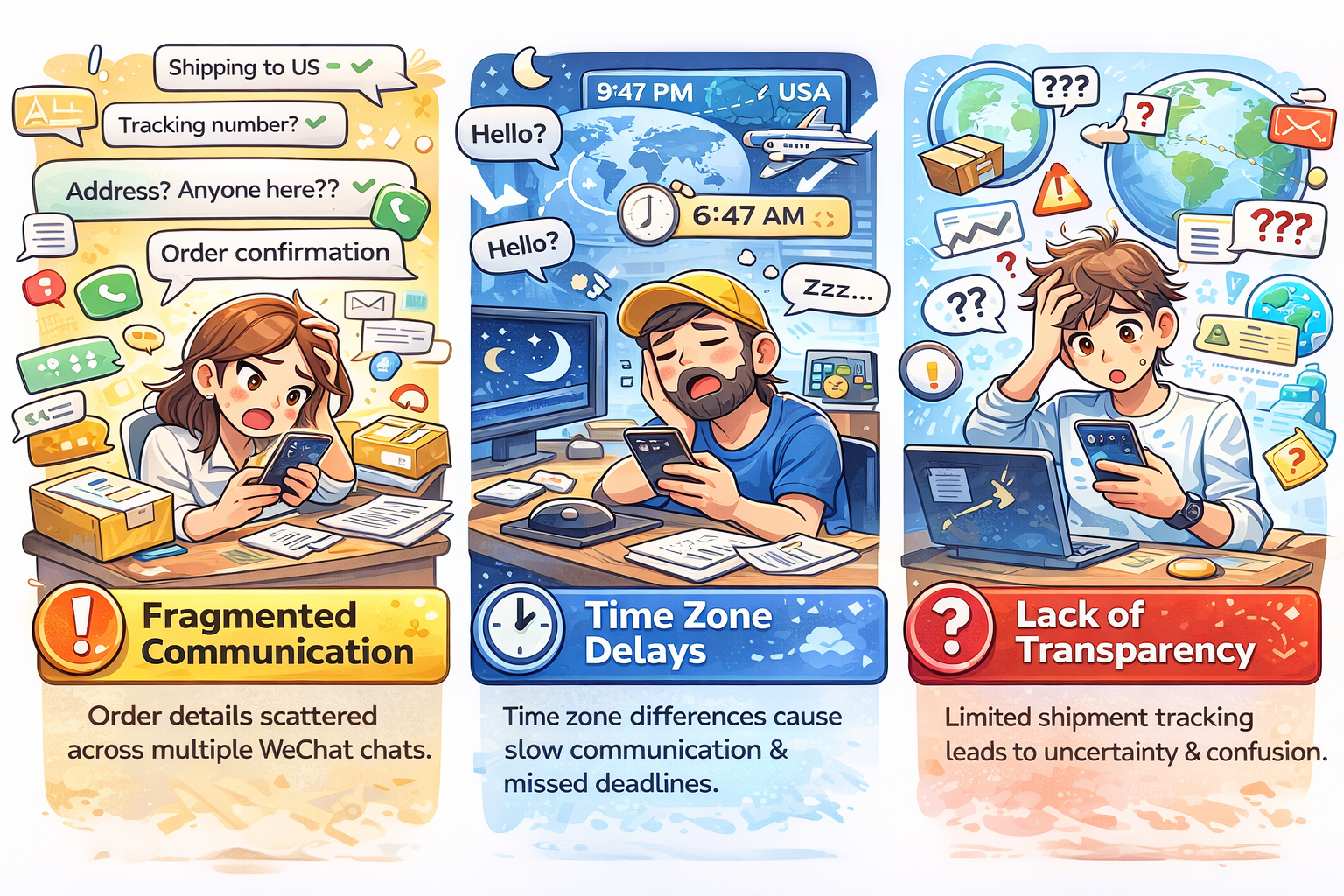
Many customers using small cross-border shipping agents rely on scattered WeChat conversations to submit order details, request updates, and track packages between China and the U.S.
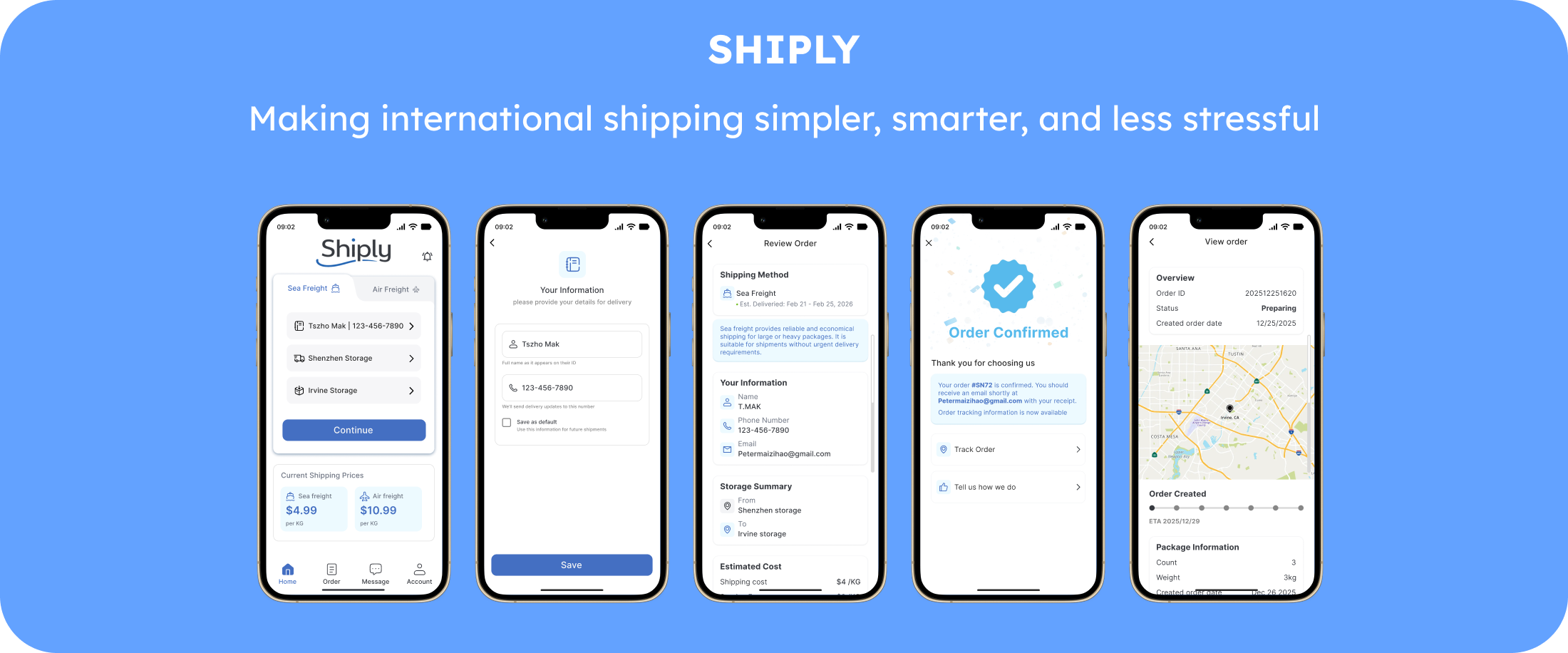
Shiply is an independent concept exploring how a customer-facing mobile app could centralize order information, shipment milestones, pricing updates, and support in one place.
ROLE
Product Designer
PROJECT TYPE
Independent Concept Project
Problem Exploration, Information Architecture, User Flows, Interaction Design
RESPONSIBILITIES
8 Weeks
DURATION
BUSINESS NEED
Customers relying on independent cross-border shipping agents often receive order details, payment information, warehouse updates, and tracking messages across multiple WeChat conversations.
CHALLENGE
How might we help customers understand what is happening to their shipment without repeatedly contacting the agent for updates?
RESEARCH
The concept began from my own experience using small cross-border shipping agents, supported by informal feedback from other users who encountered similar communication and tracking issues.
Research Approach
Personal experience review and informal user feedback
Existing workflow analysis and competitive product review
I interviewed five users who had shipped packages between China and the U.S. through independent agents within the previous year.
Competitive Analysis
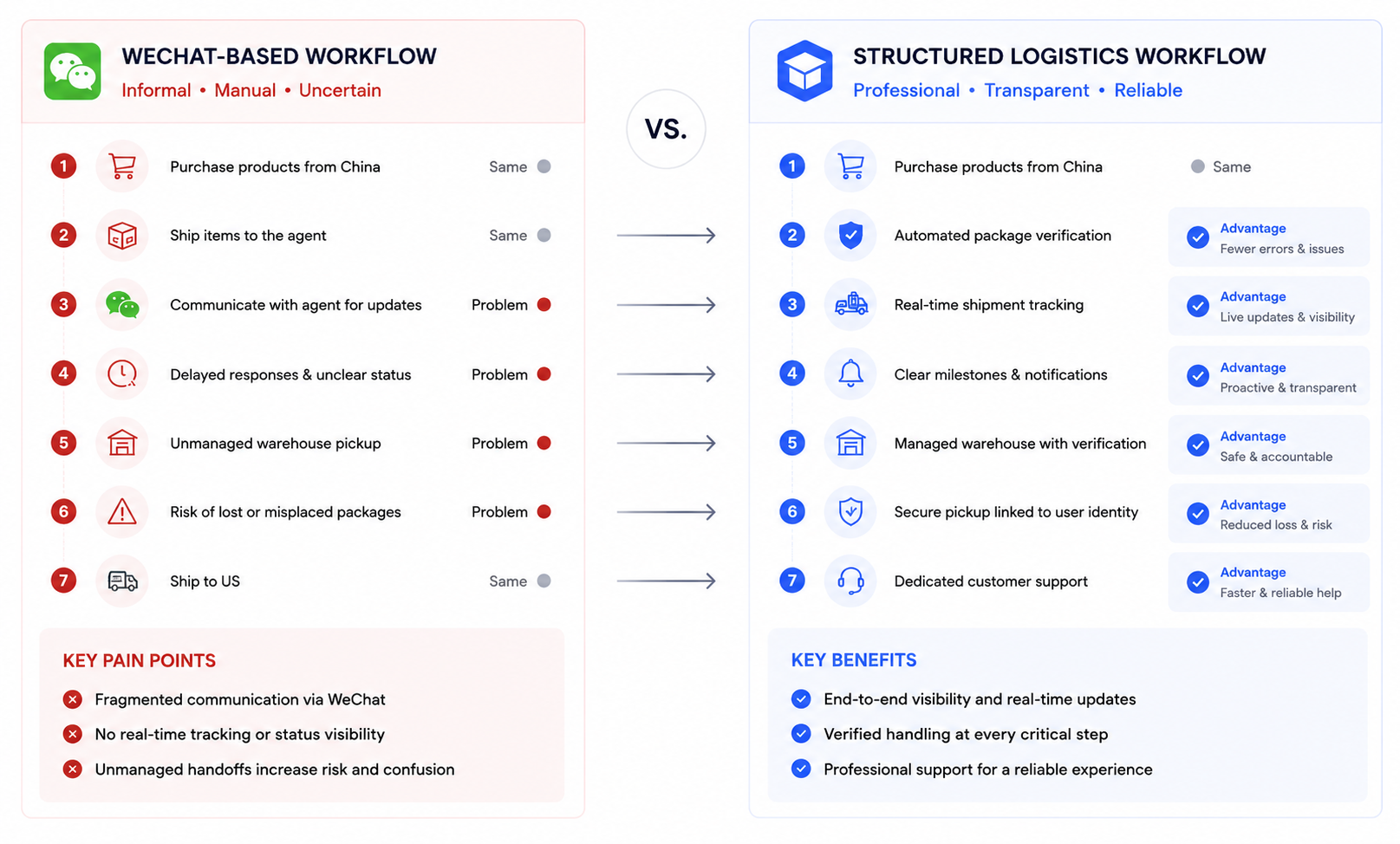
I reviewed Cainiao to understand how a structured logistics platform organizes orders, shipment milestones, and support information.


Key Takeaways
Consolidate Order Information
Users need one place to review shipment details, warehouse locations, pricing, and support history.
Make Progress Easy to Understand
Shipment status should be presented through clear milestones, timestamps, and the next expected step.
Research Conclusion
Clear shipment visibility and a more structured workflow can reduce communication friction, improve trust, and create a more reliable cross-border shipping experience.
DESIGN PRINCIPLE
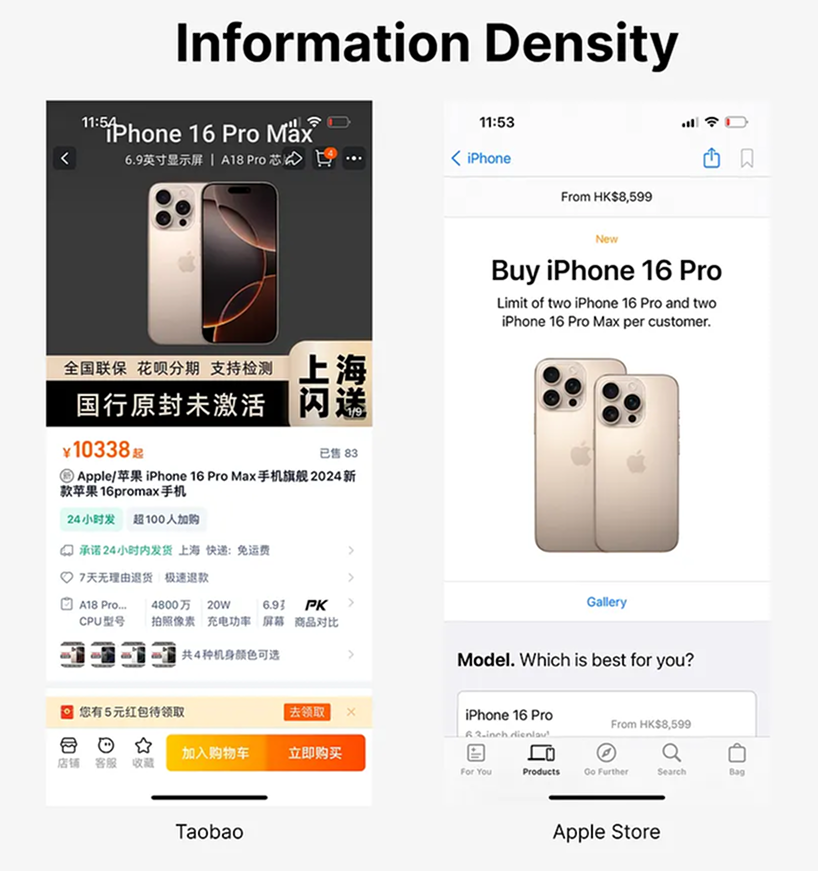
Show the Right Information at the Right Time
Users need detailed shipment information, but not all at once. I used progressive disclosure to surface the current status, next step, and required action first, while keeping secondary details available on demand.
No
Yes
DESIGN
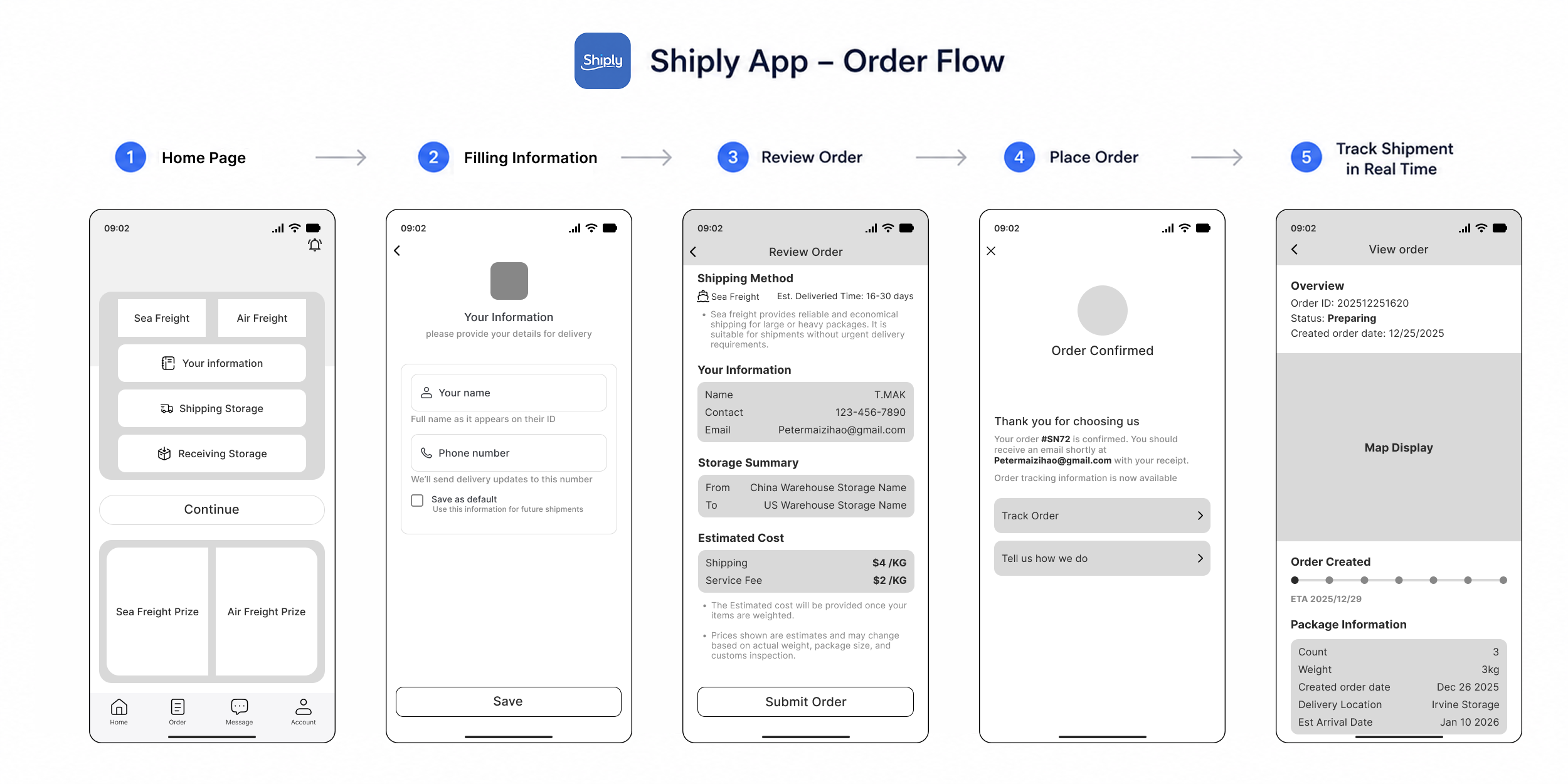
Low-Fidelity
The low-fidelity phase defined core flows, key features, and information hierarchy before moving into high-fidelity design.
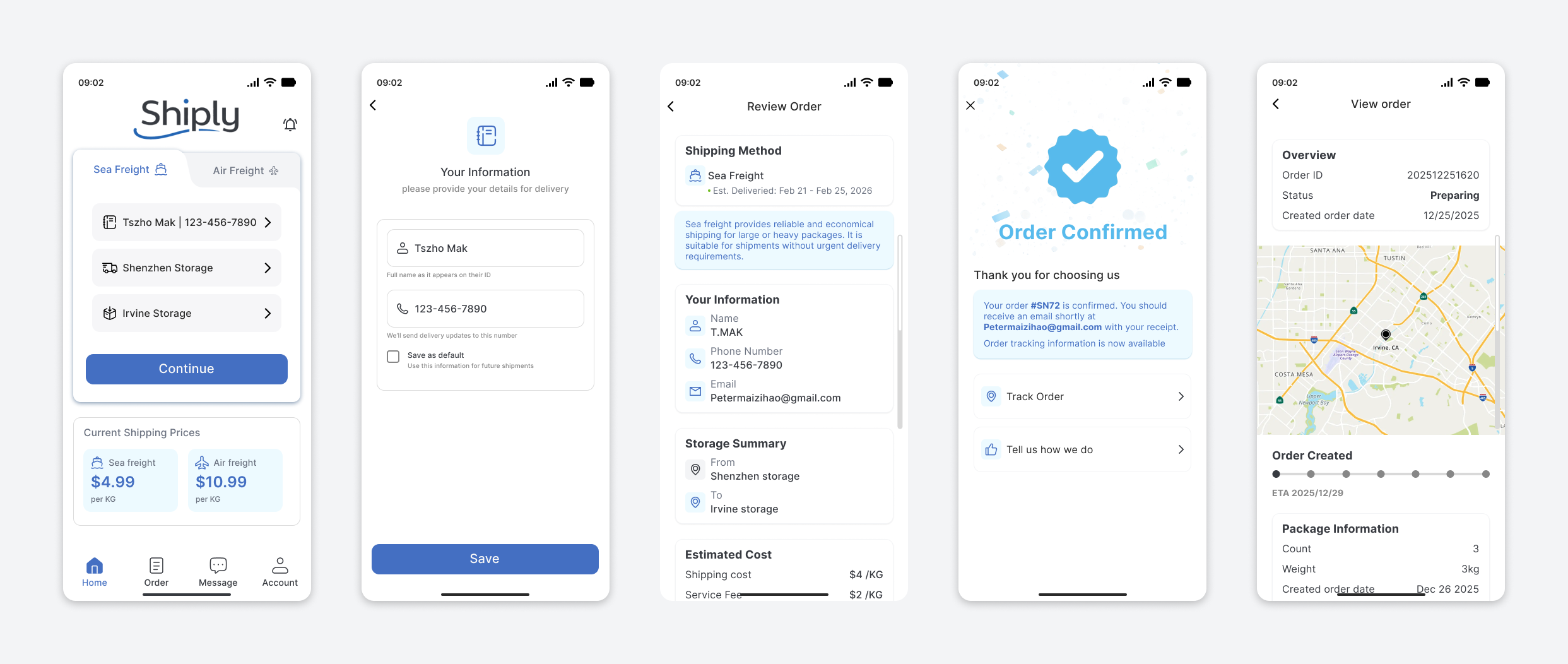
High-Fidelity
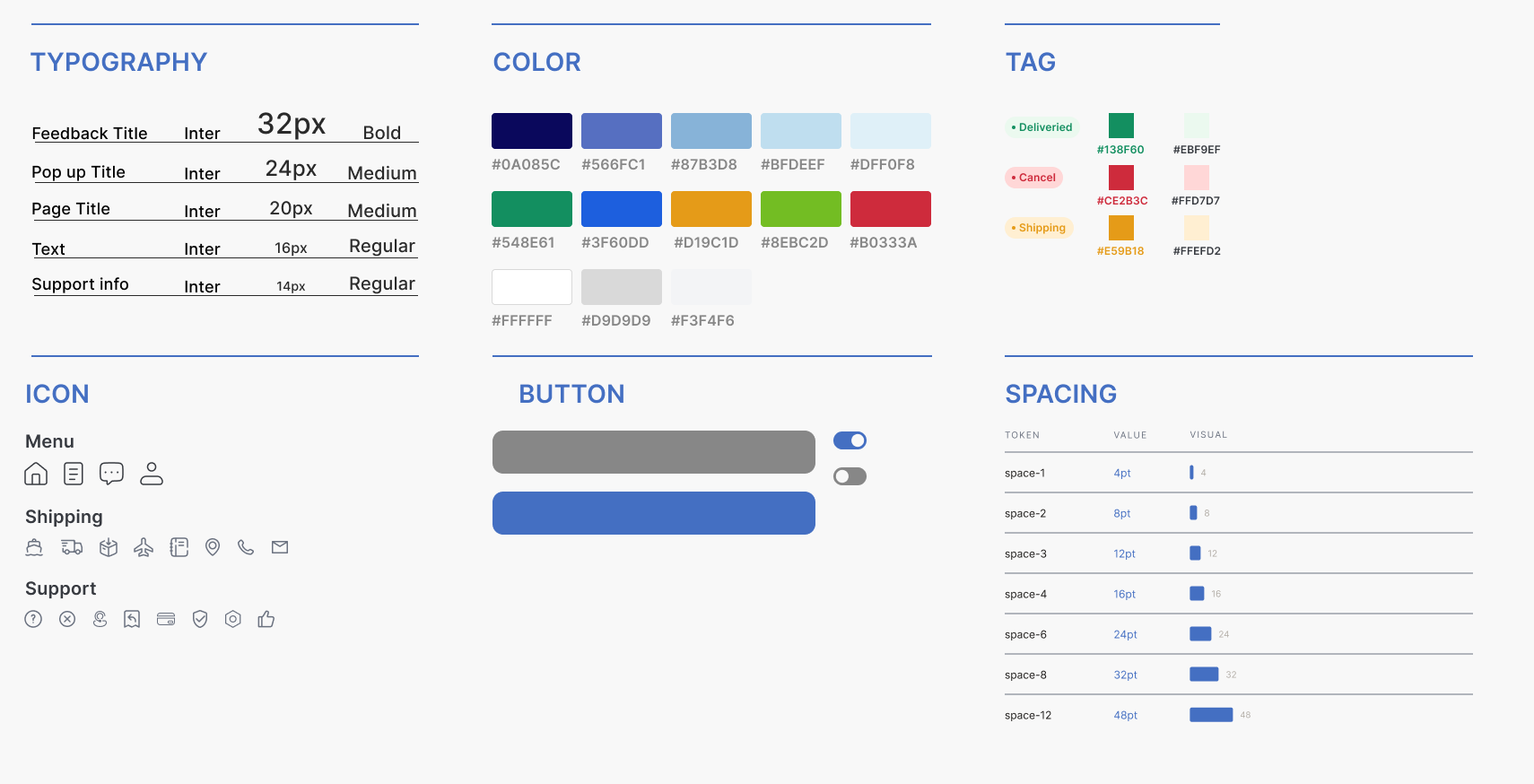
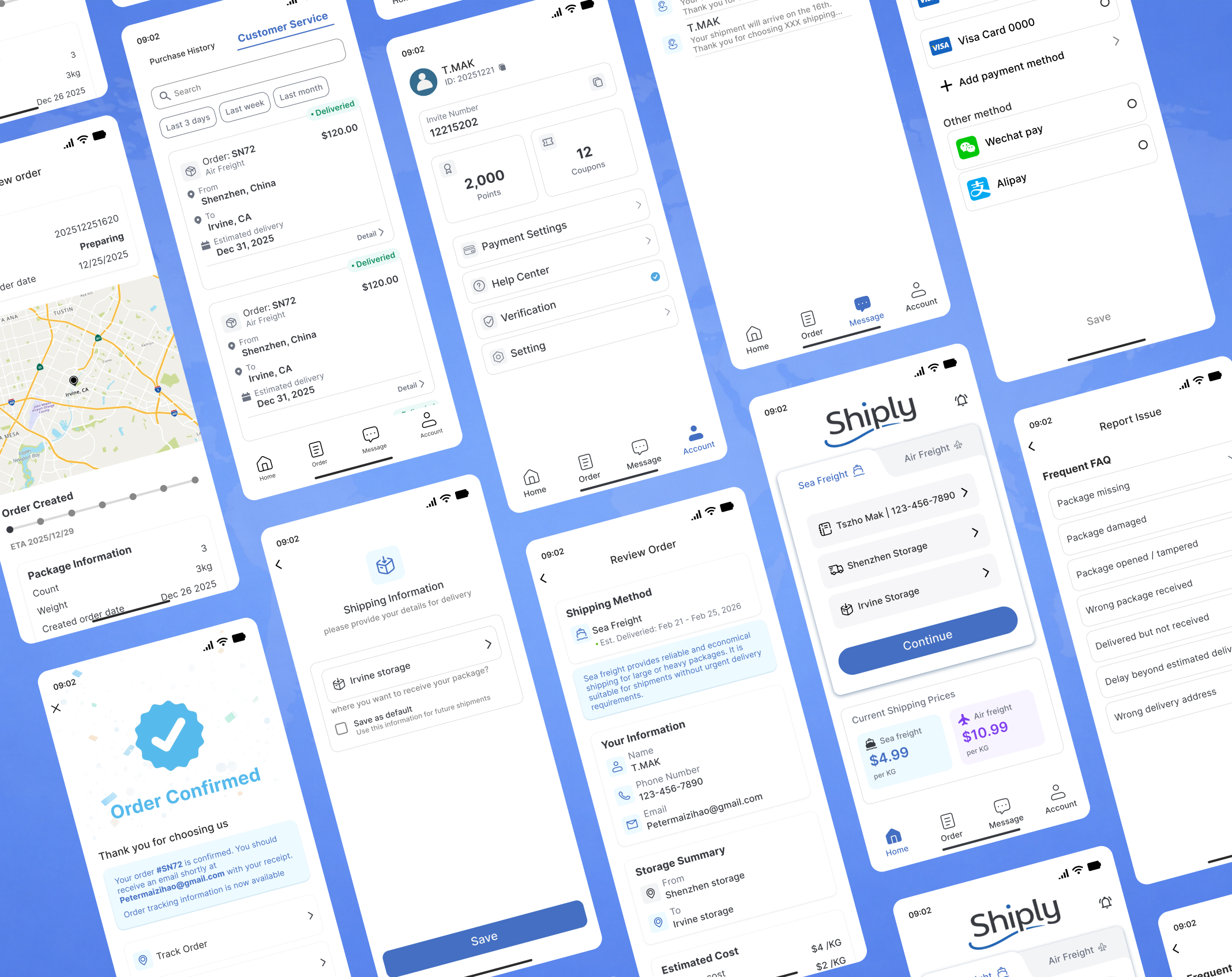
The final interface prioritizes the current shipment status, next expected step, and required user actions. Blue serves as the primary brand color, while semantic colors distinguish delivered, delayed, pending, and issue states.
IMPACT
Takeaway
This project showed me that shipment visibility depends on both interface design and operational data. A clear customer experience requires defining who updates each milestone, when the information becomes available, and how exceptions are handled.
I also learned that simplifying a logistics product does not mean removing information. It means prioritizing the current status, next step, and required action while keeping detailed records available when needed.
2025
Turning a confusing brand into a game-first experience
Redesigning HyberGaming’s website to clarify its focus and support seven platform partnerships.