
Shiply
Overview
Designing a logistics app to streamline cross-border shipping communication and improve delivery transparency
Role
UI/UX Designer
Tool
Figma
Duration
4 Weeks
Shiply Shipping Project
Solo Project
Due to fragmented communication and time zone delays, users often faced uncertainty and missed shipments. I designed a dedicated app to streamline order handling and provide clear, real-time shipping updates.
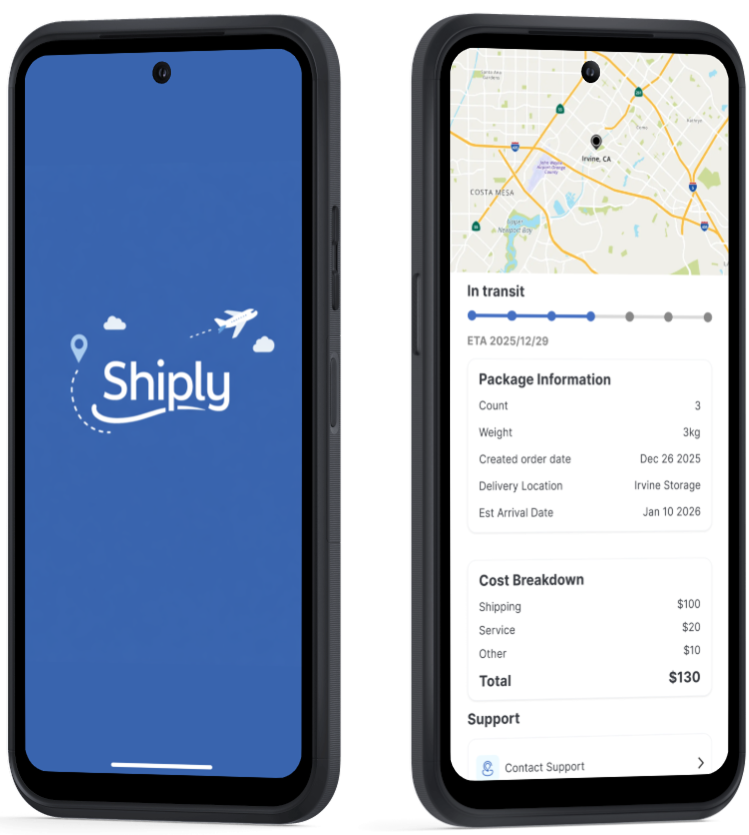
Cross-Border Logistics App Design
Project
📄 Overview
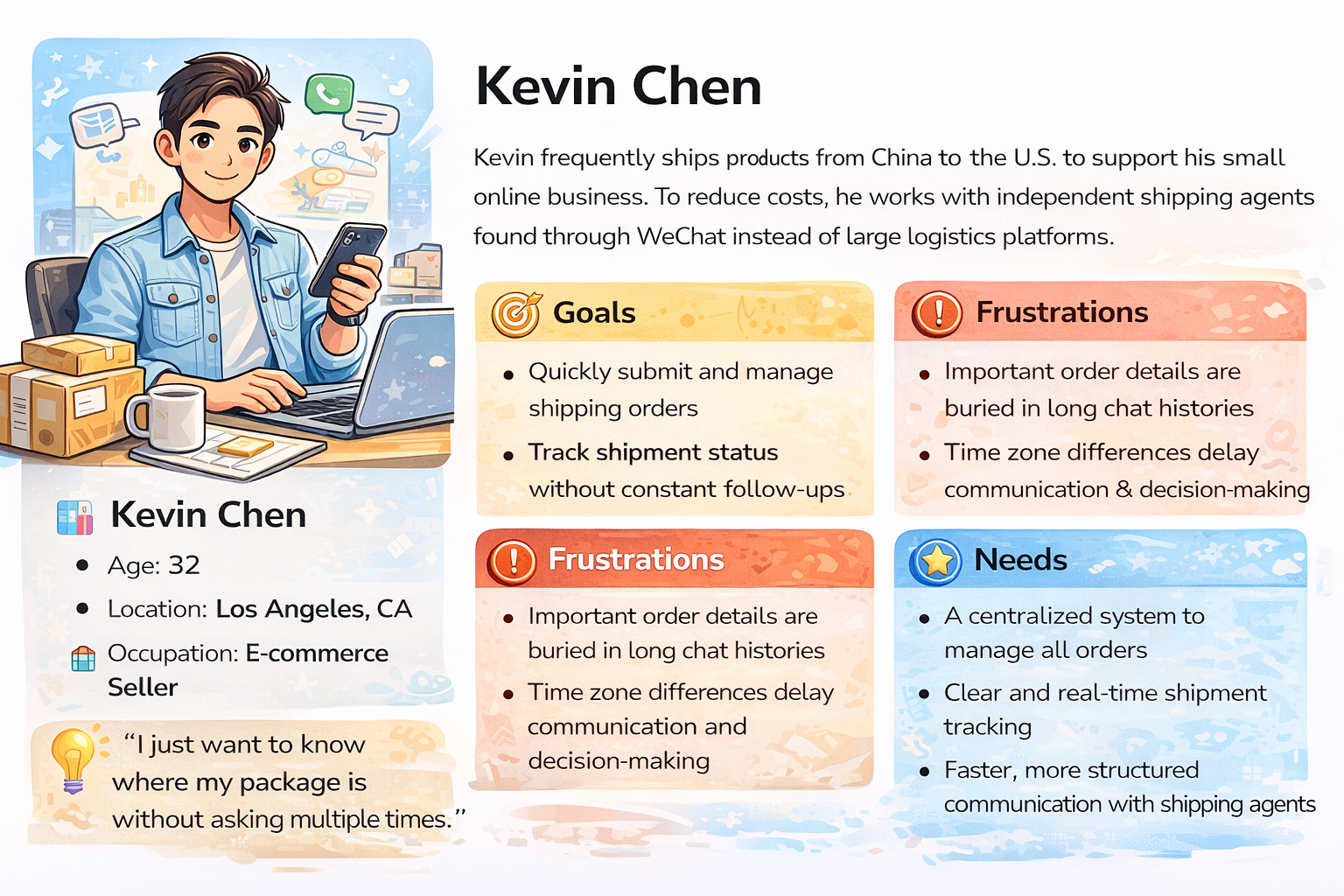
This project explores the design of a cross-border logistics app for independent shipping agents between China and the United States. While these agents offer more affordable services, they rely heavily on WeChat, leading to fragmented workflows, delayed communication, and limited shipment visibility.
To address this, I designed a centralized solution that streamlines order management, improves communication, and provides real-time tracking.
👤 Role
This was a self-initiated project where I identified an opportunity in the informal cross-border logistics market and independently drove the end-to-end design process, including user research, workflow analysis, and product design.
Problem
⚡ The Challenge
How might we streamline cross-border shipping workflows while improving communication and shipment transparency for users?
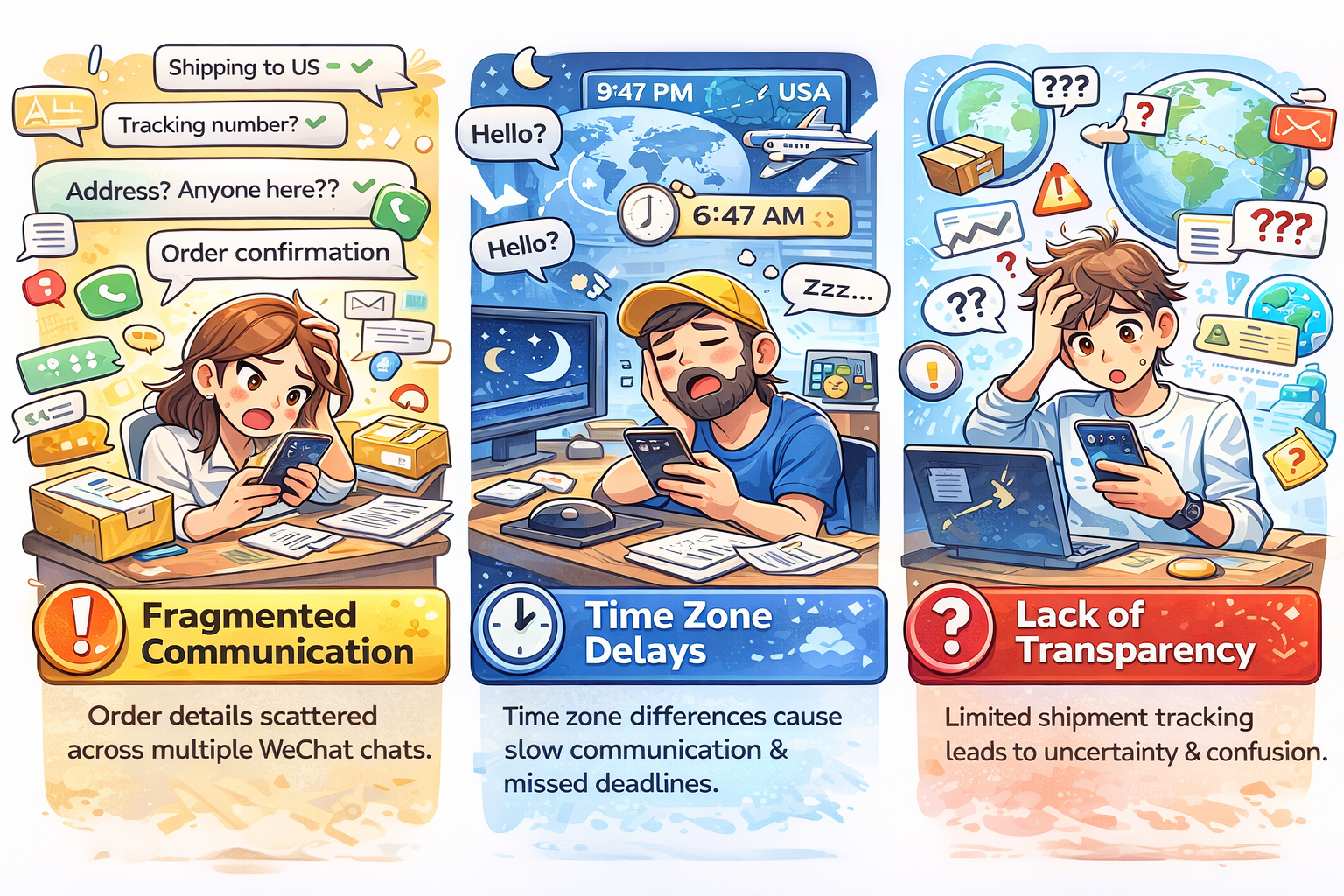
Fragmented Communication
Order details are managed through WeChat chats, making it difficult to track, organize, and verify shipment information.
Time Zone Delays
Cross-border communication leads to slow responses, causing missed deadlines and delayed shipments.
Lack of Transparency
Users have little visibility into shipment status, resulting in uncertainty and reduced trust.
Design Process
📚 Research
To better understand the current cross-border logistics experience, I analyzed how independent shipping agents and users manage orders through WeChat.
I reviewed real communication workflows, focusing on how users submit order details, confirm shipping methods, and track delivery progress. This revealed key friction points, including scattered information across chat threads, delayed responses due to time zone differences, and the lack of a structured tracking system.
These insights helped define opportunities to streamline communication, standardize order management, and improve shipment visibility.
📊 Competitive Analysis
To better understand existing logistics solutions, I analyzed the interface and service model of Cainiao, a leading cross-border shipping platform.
I focused on how orders are structured, how shipment information is presented, and how the platform standardizes communication between users and logistics providers. This helped identify key differences between structured platforms and the current WeChat-based workflows used by independent agents.

📊 Research Insights
Through research, I identified a clear gap between structured logistics platforms and informal WeChat-based workflows.
While platforms like Cainiao standardize order management and provide real-time tracking, independent agents rely on manual communication, leading to inefficiencies and poor visibility. This insight informed the direction of building a more structured, transparent, and scalable solution.
Insights
💡 Key Insights
From my research, several key insights emerged around user behavior in cross-border logistics:
The main user group (20–50 years old) tends to prefer simple and intuitive interfaces.
Users value speed and clarity, making minimal and structured design the most effective approach.
WeChat-based communication introduces friction through scattered information and manual follow-ups.
A lack of real-time tracking reduces trust and creates uncertainty during the shipping process.
Persona
Ideation
📐 Design Principles
From my research, several key principles guided the design of the logistics experience:
Simplicity over complexity
Users prioritize efficiency, so the interface should be clean and easy to navigate, enabling quick task completion.Clarity and structure
Information such as order details and shipment status should be clearly organized and easy to access at any time.Transparency builds trust
Providing real-time tracking and clear updates reduces uncertainty and increases user confidence.Reduce communication friction
The system should minimize the need for back-and-forth messaging by standardizing workflows and automating key steps.
DESIGN
Low-Fidelity
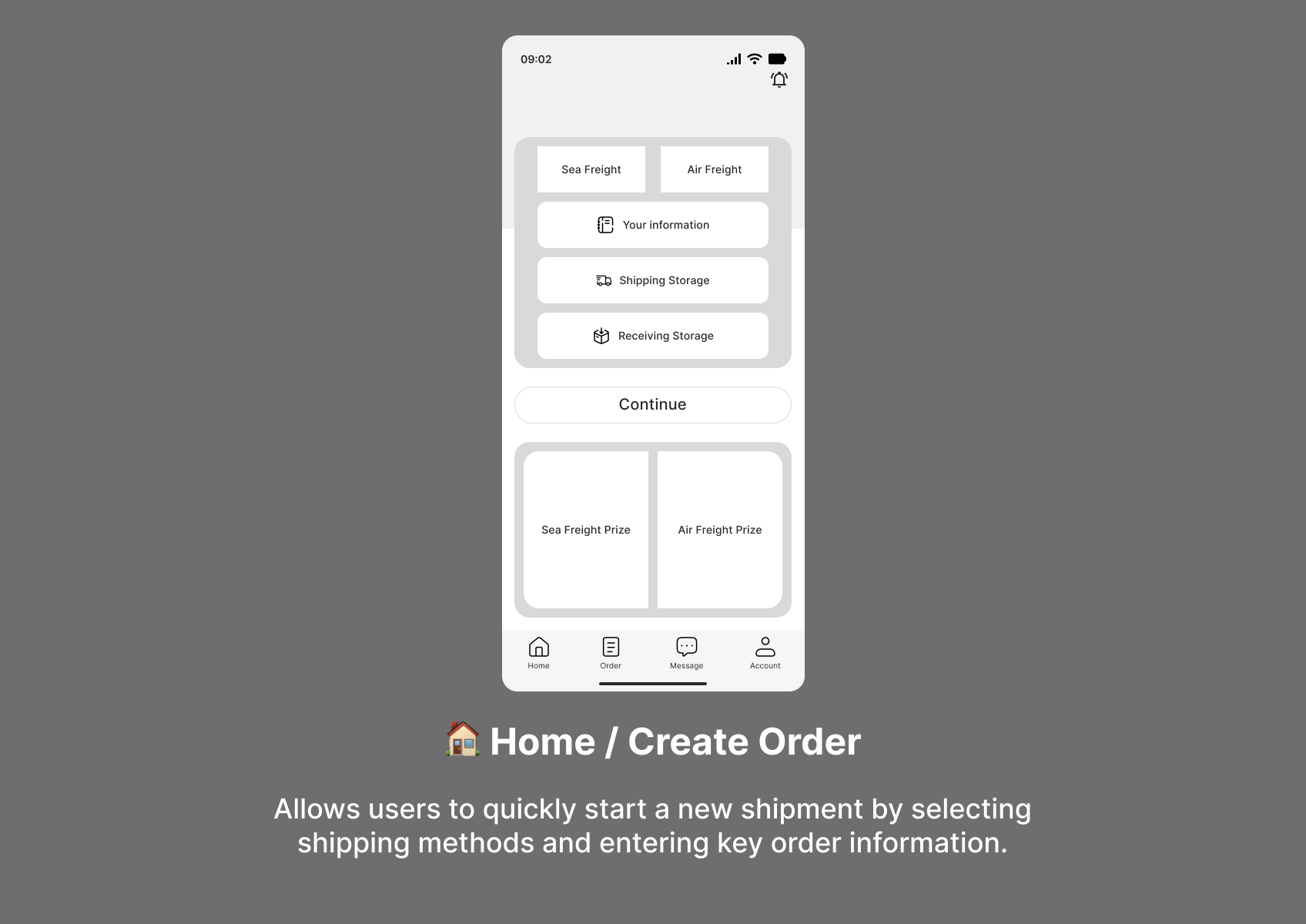
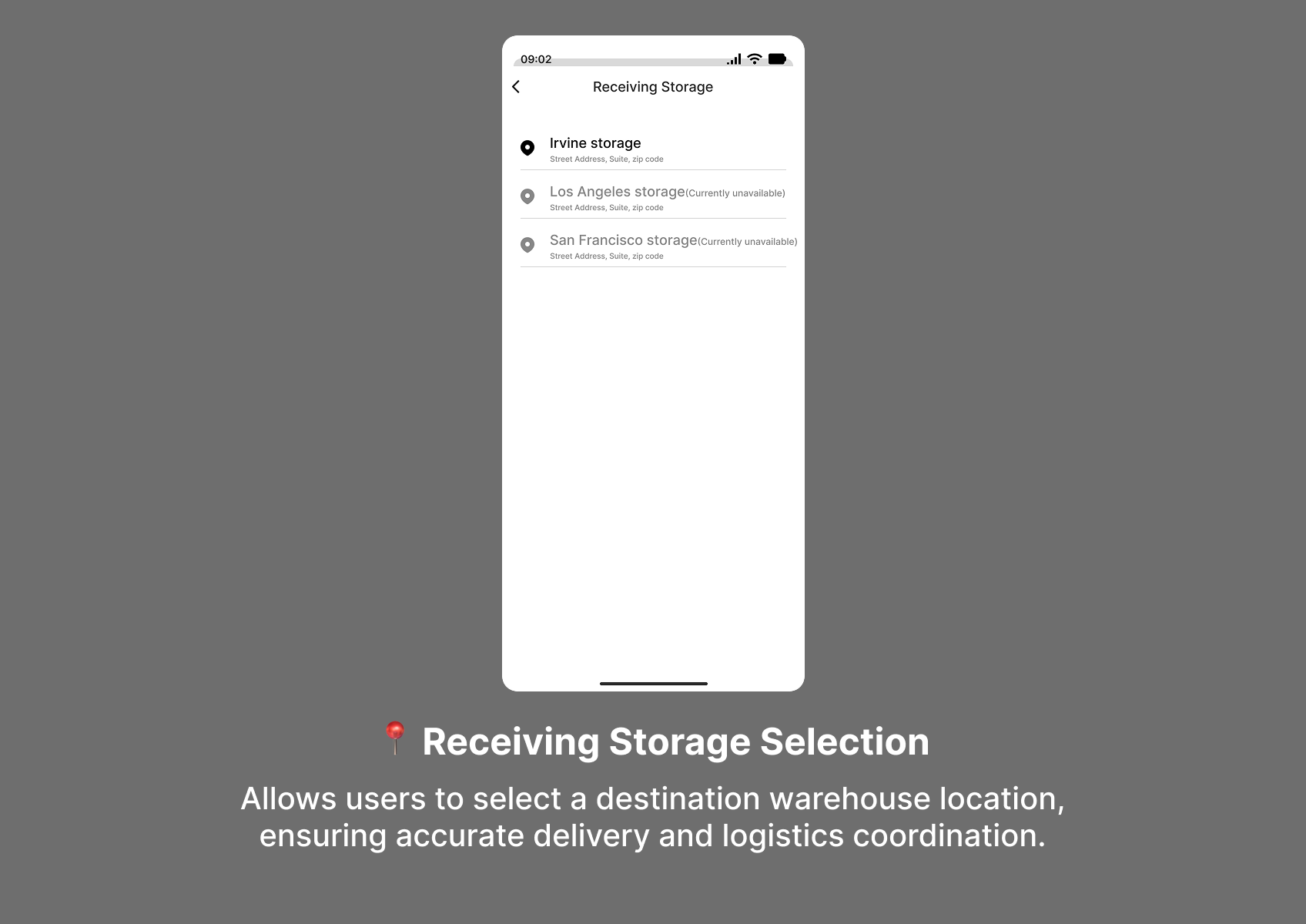
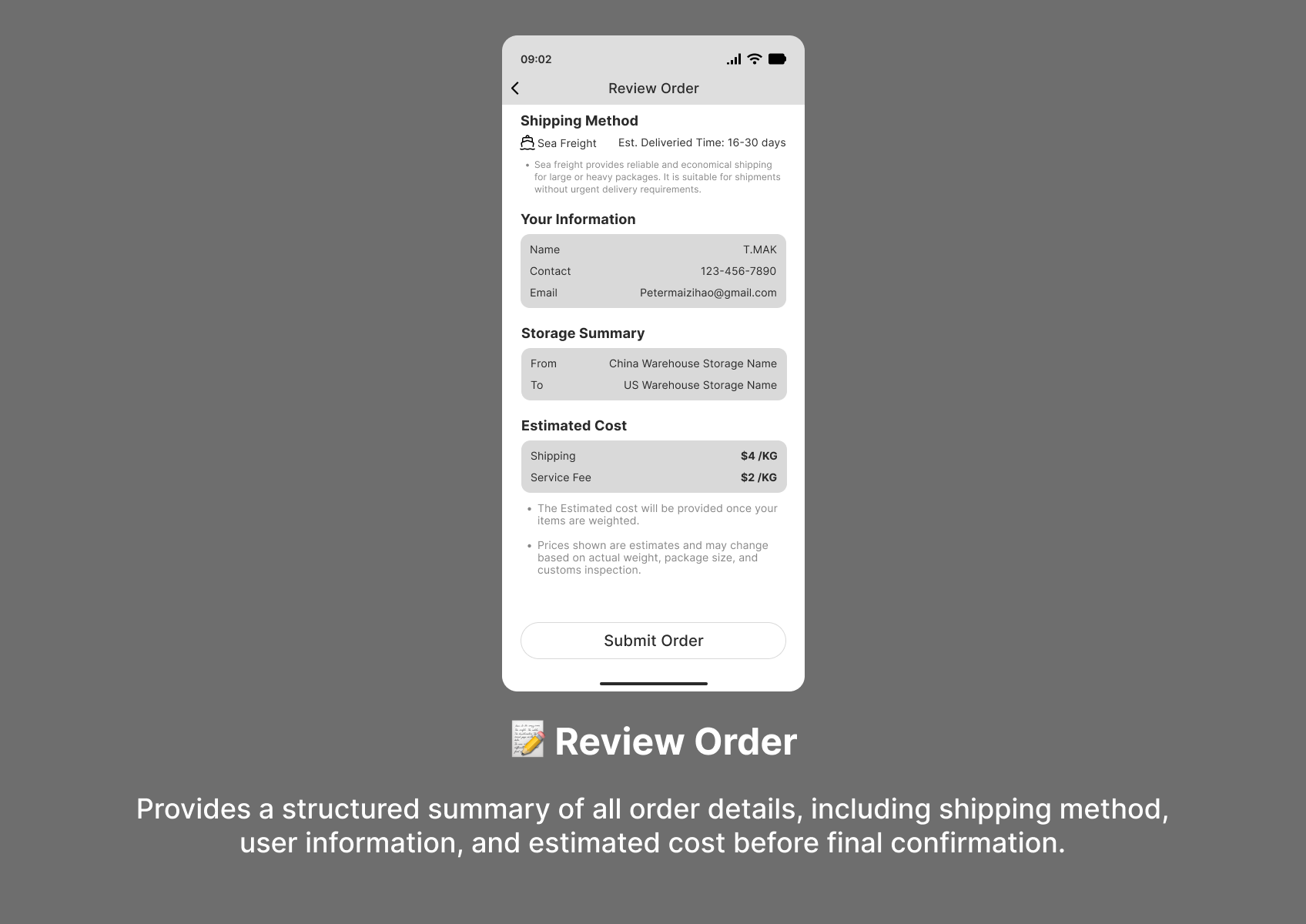
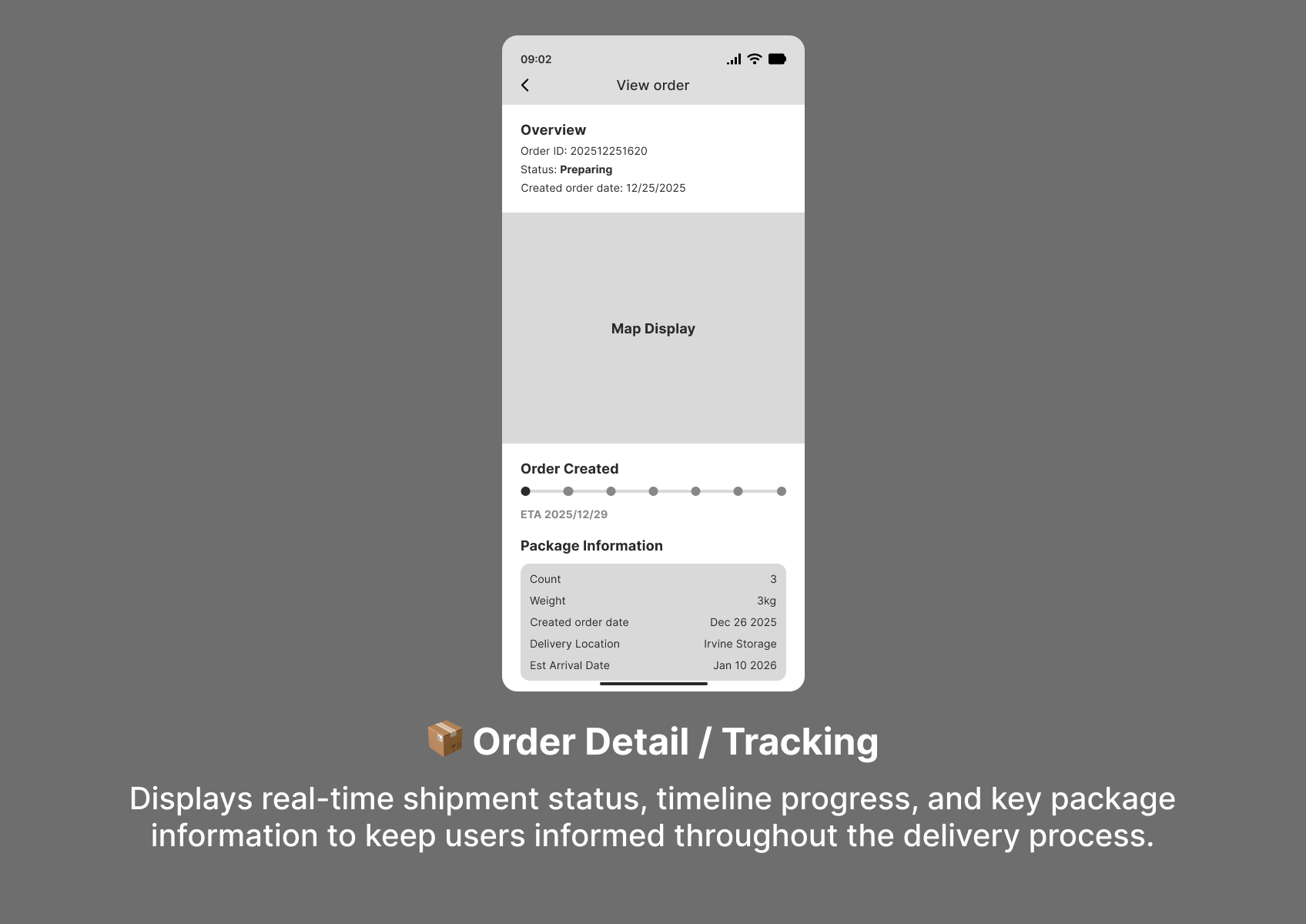
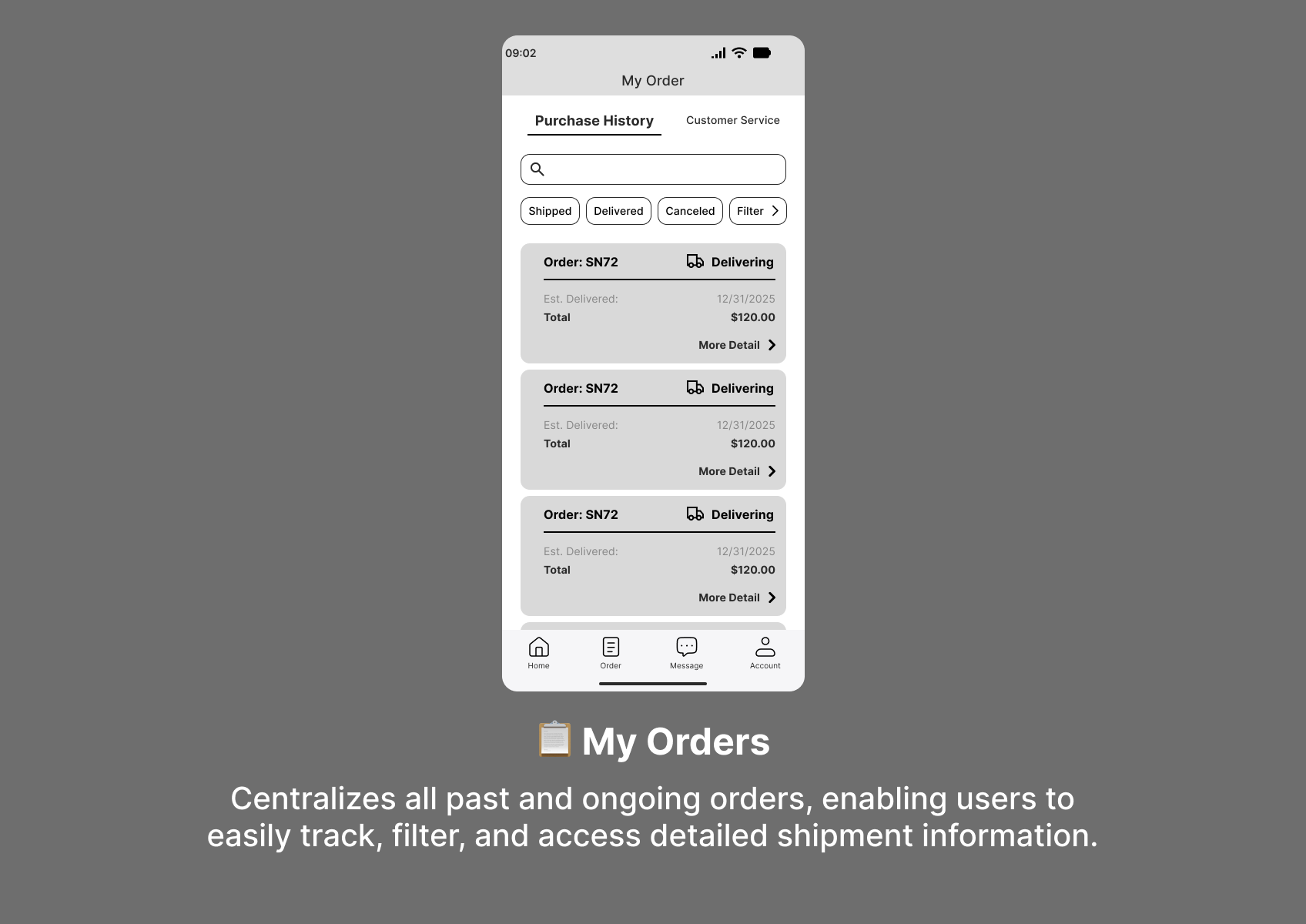
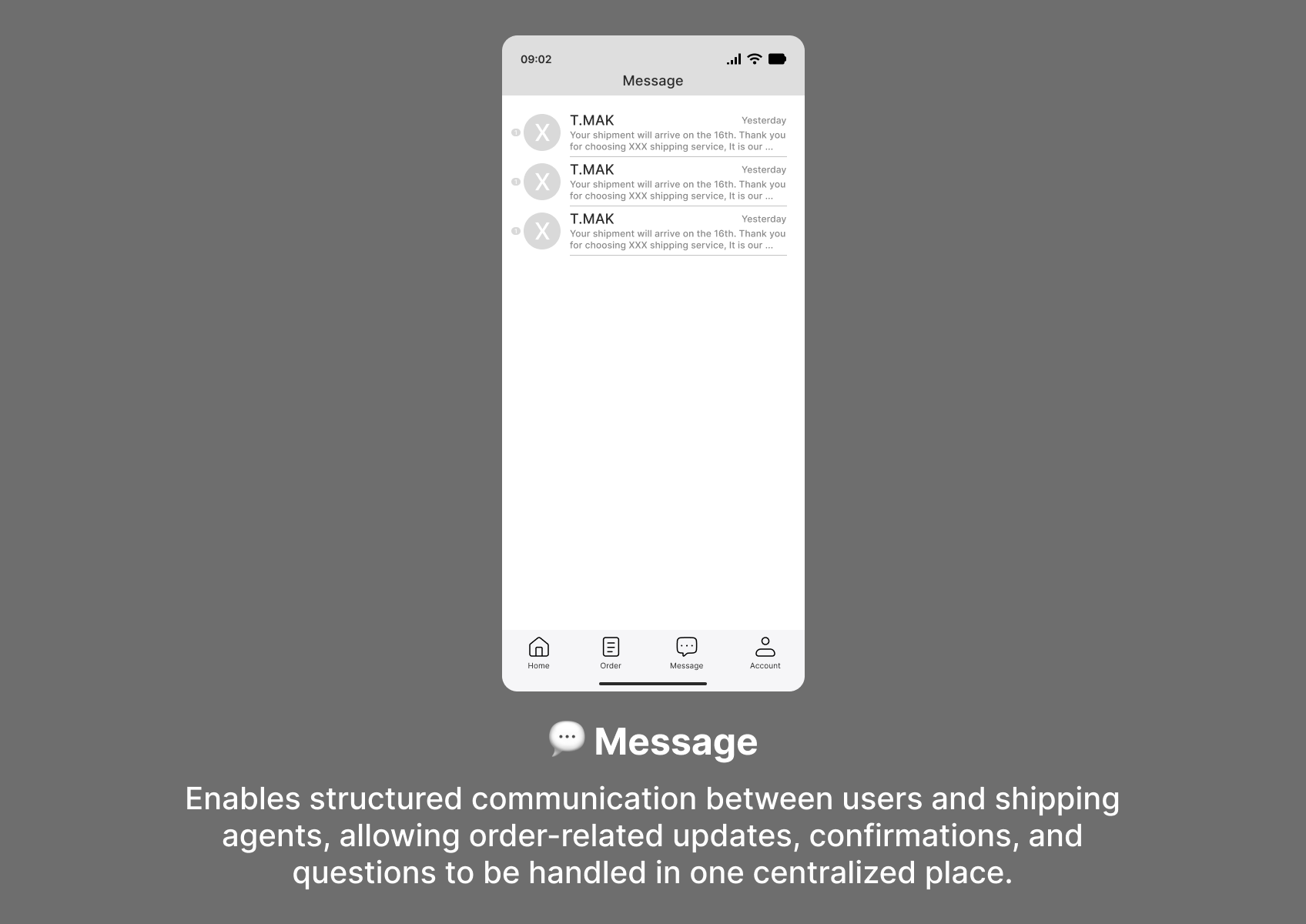
The low-fidelity phase focused on defining core user flows and structuring key features such as order creation, shipment tracking, and communication.
The goal was to quickly explore different layouts and information hierarchies, ensuring a clear and efficient workflow before moving into high-fidelity design.
DESIGN
High-Fidelity
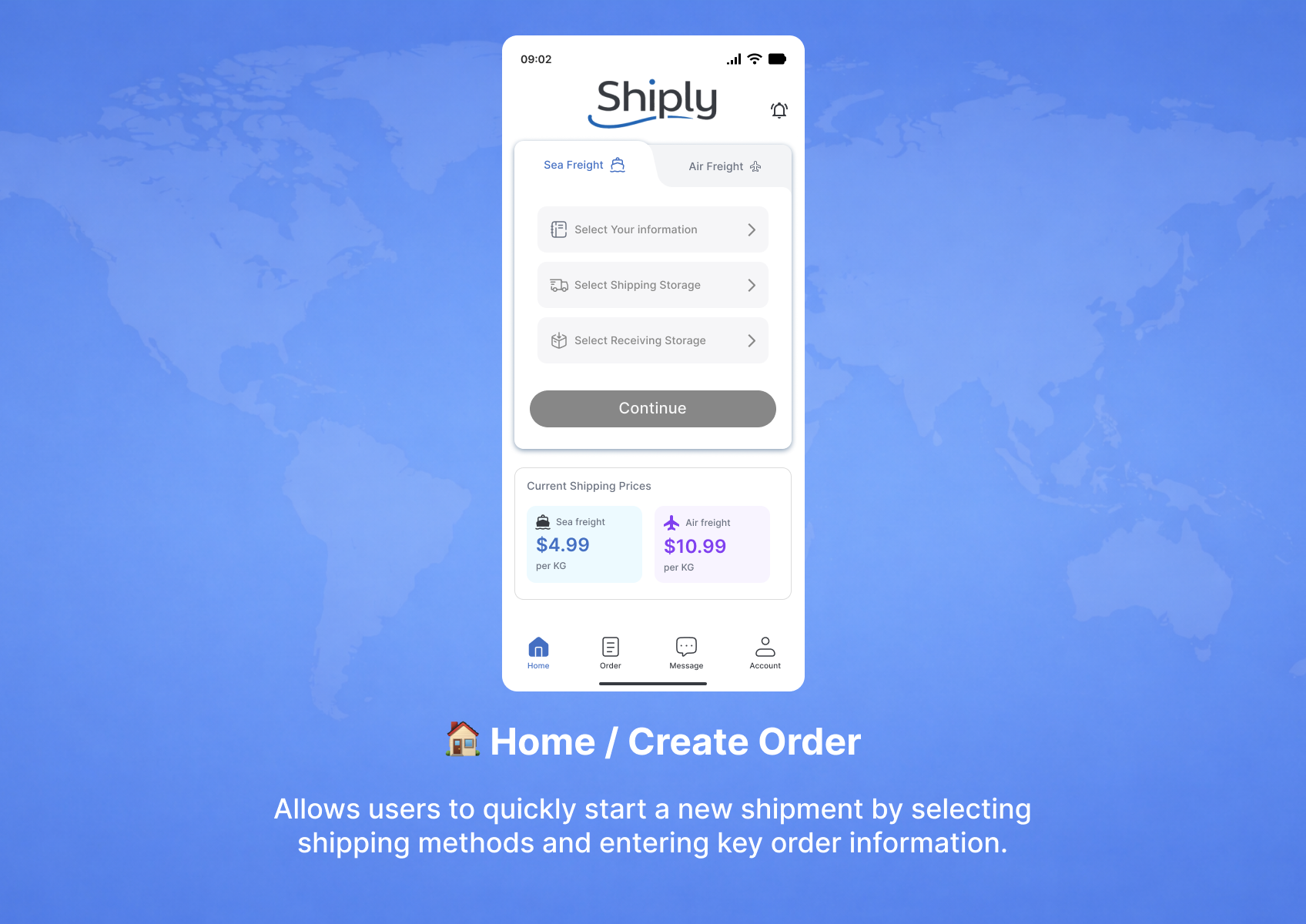
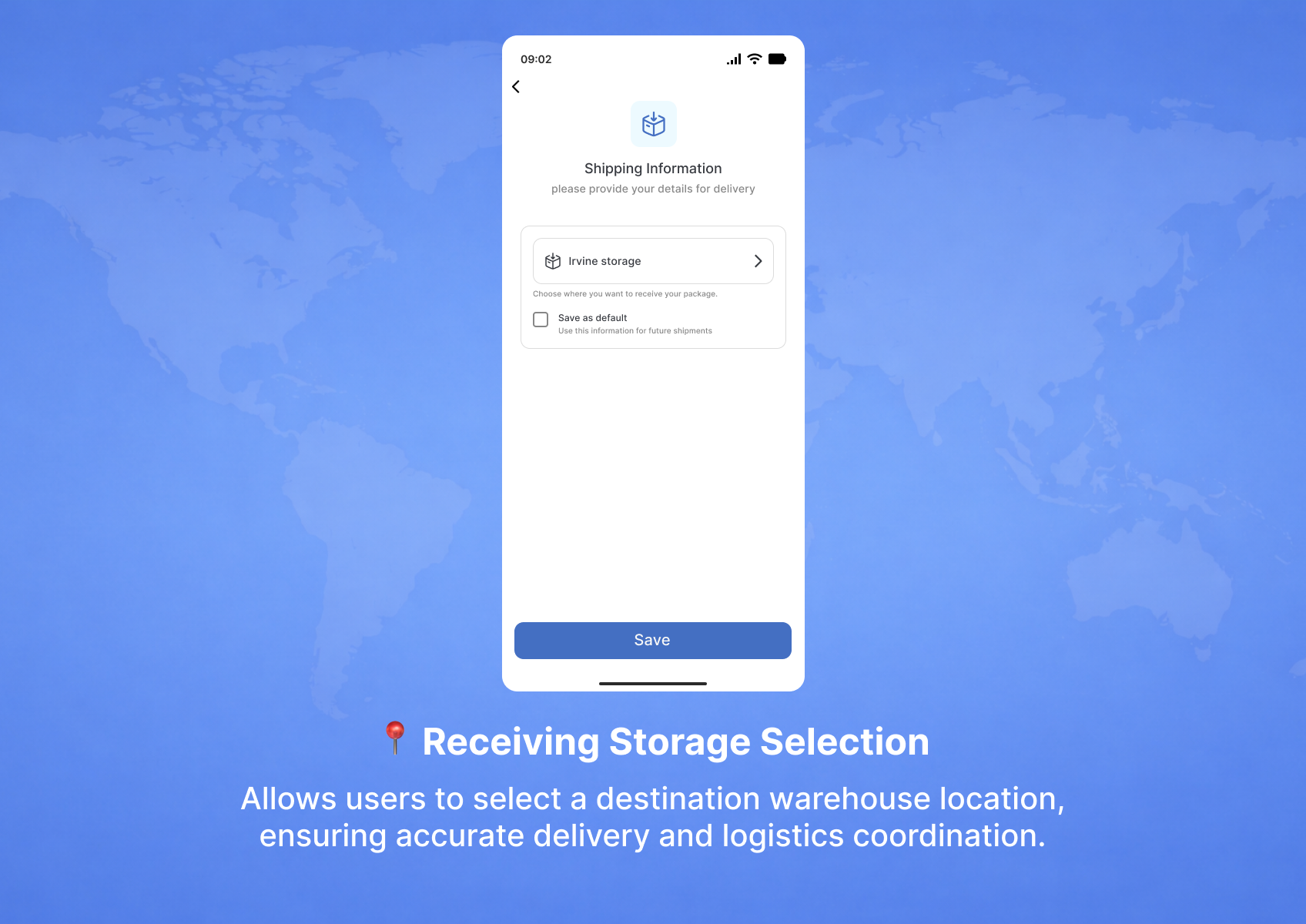
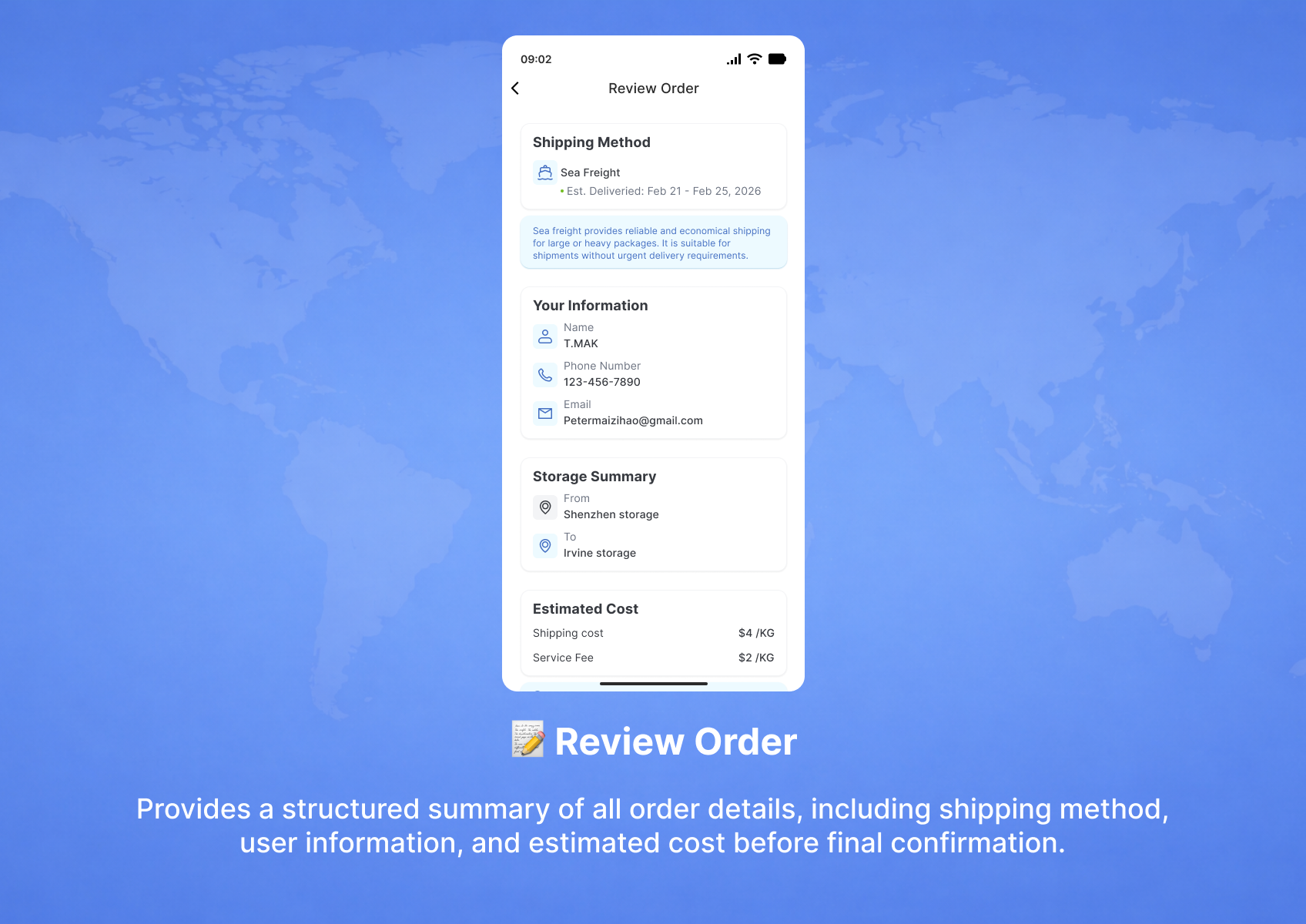
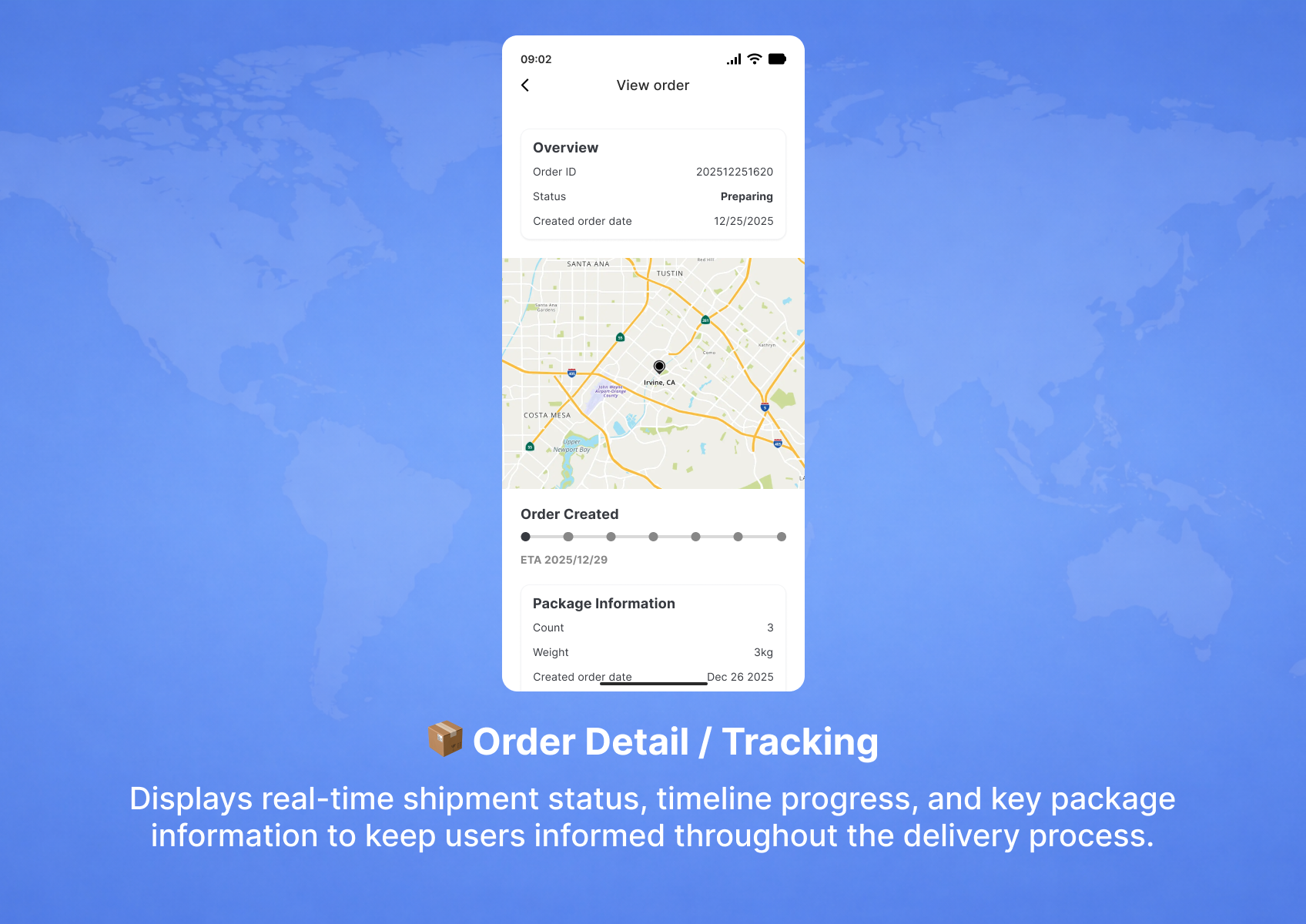
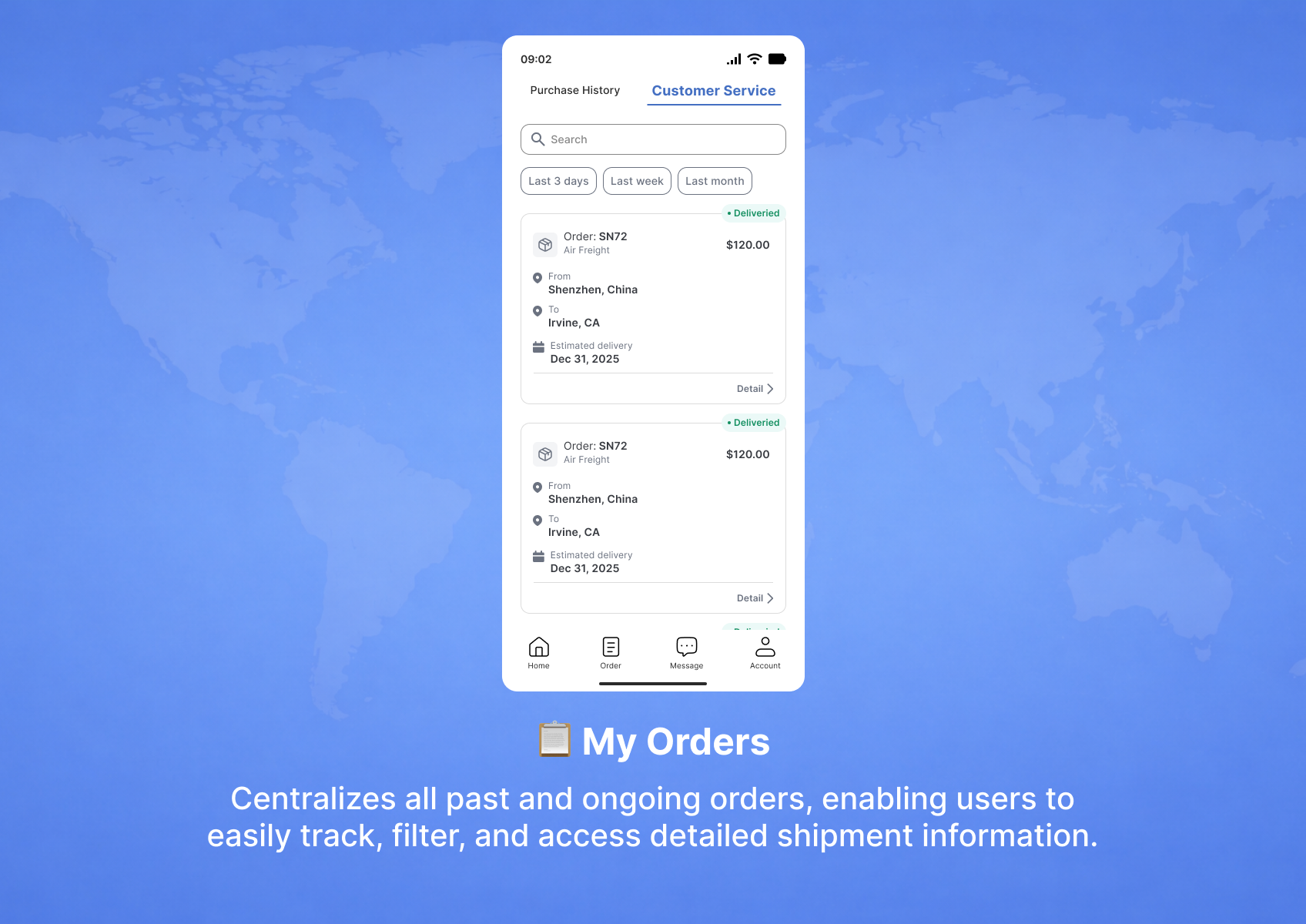
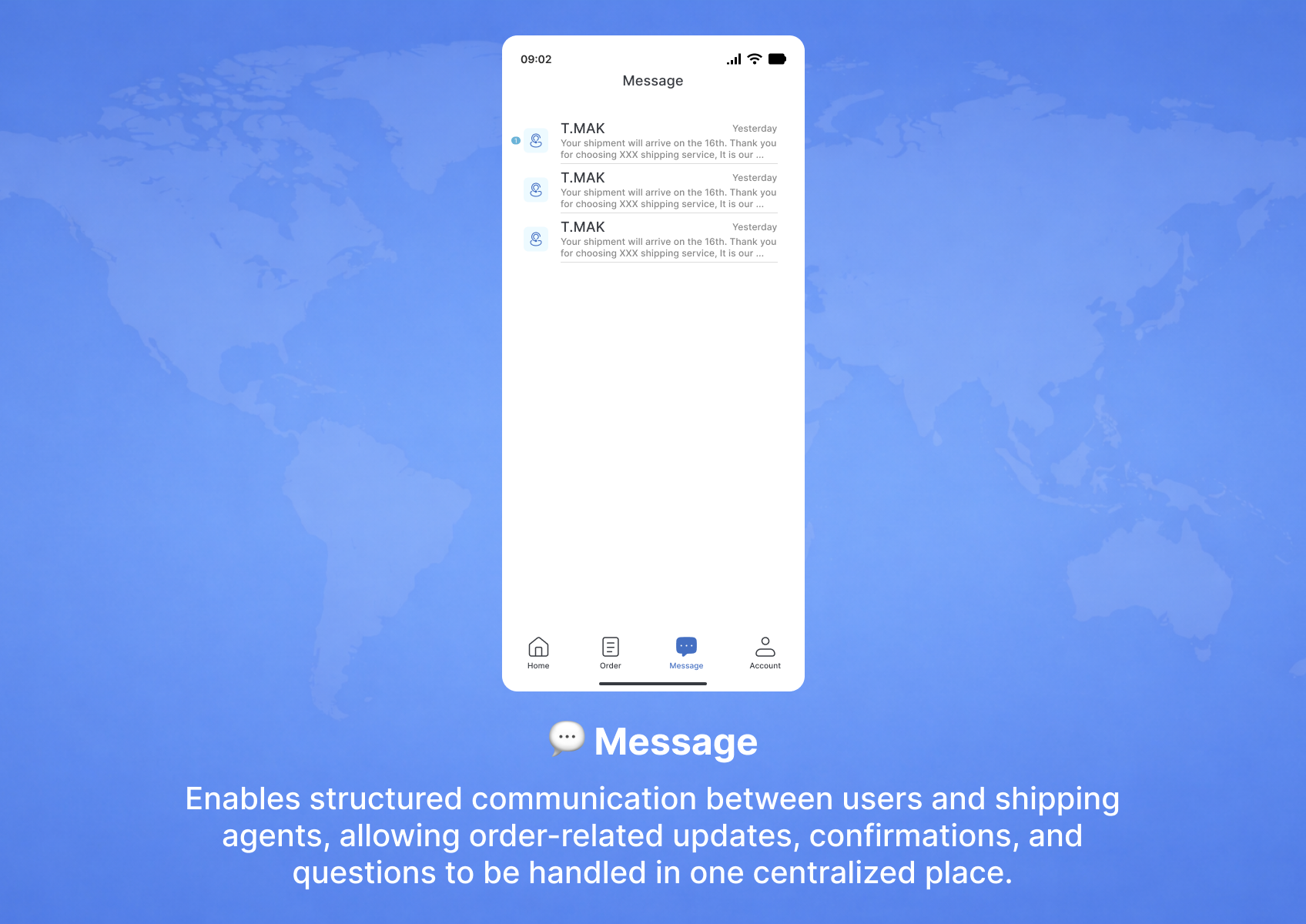
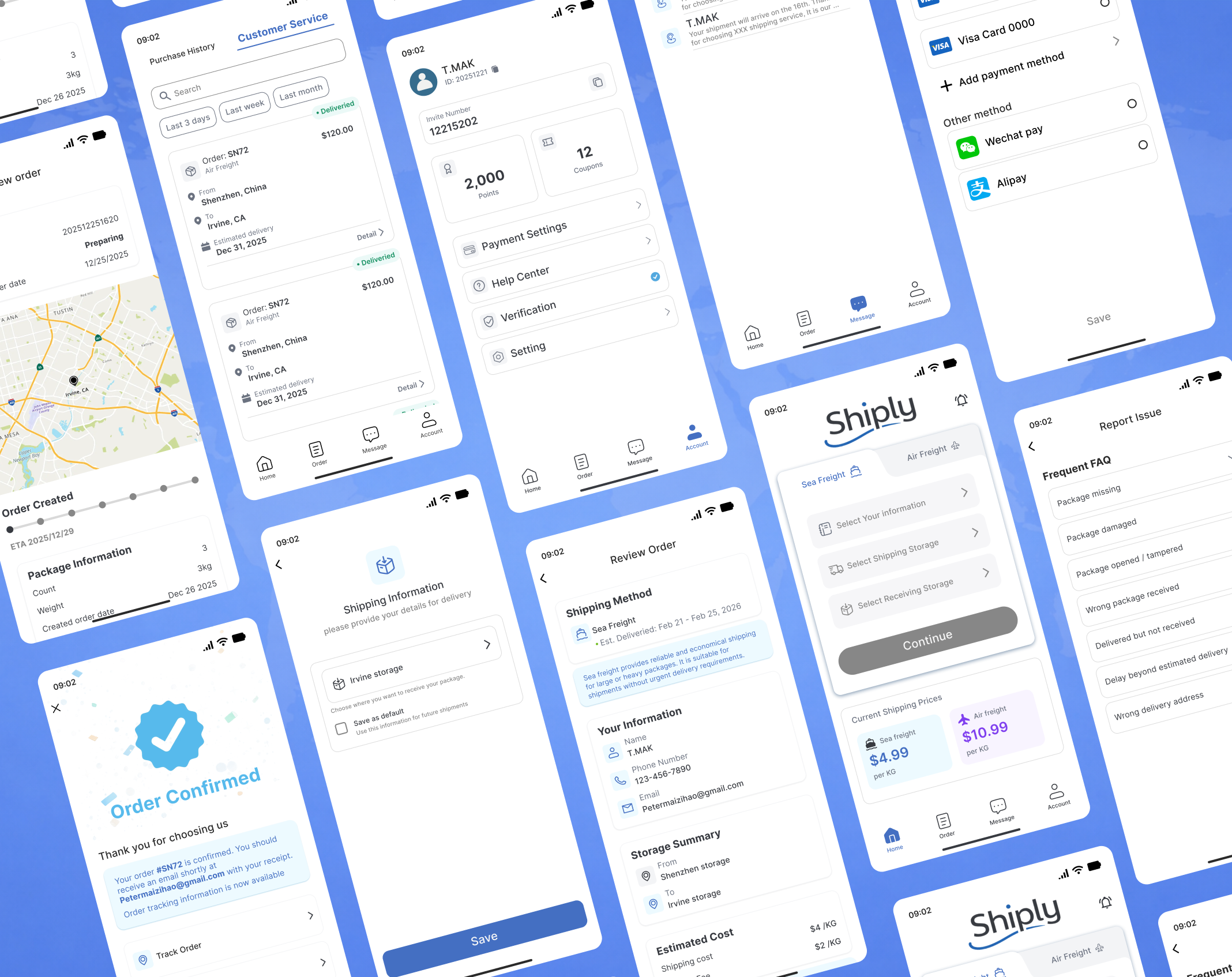
The high-fidelity phase focused on refining the visual design and creating a clean, intuitive interface tailored to users’ needs.
The goal was to simplify complex logistics information through clear hierarchy, consistent components, and minimal visual language, ensuring users can easily complete tasks and understand shipment status.
Takeaway
📈 Growth & Learnings
Through this project, I gained a deeper understanding of designing for real-world logistics workflows and the importance of structuring complex information into a clear and intuitive experience.
I also learned how to identify user pain points from fragmented systems and translate them into scalable product solutions.